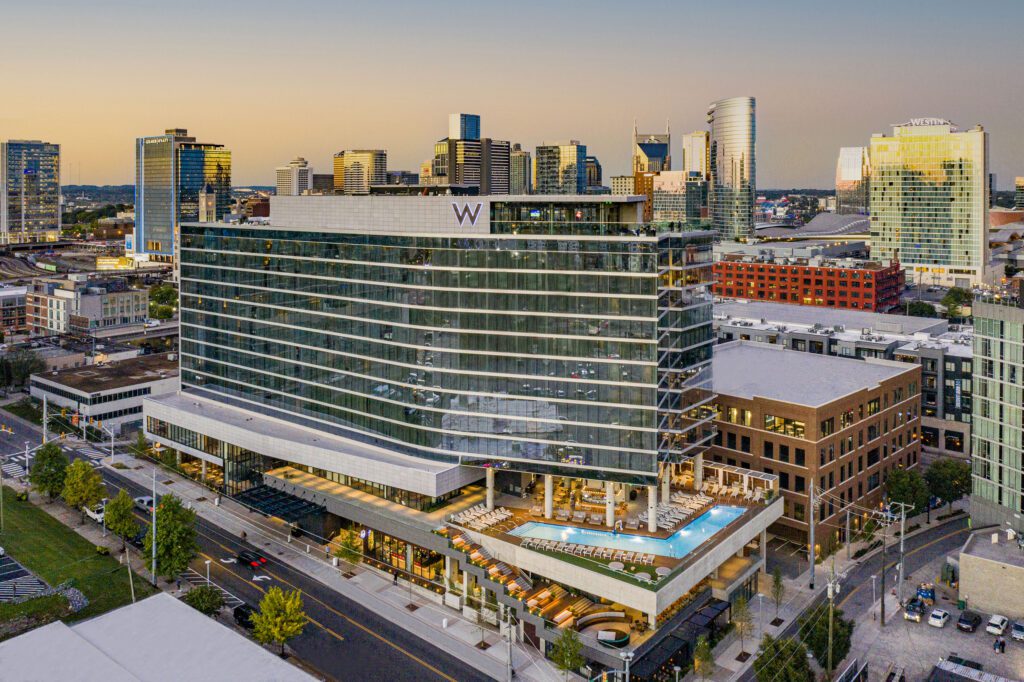
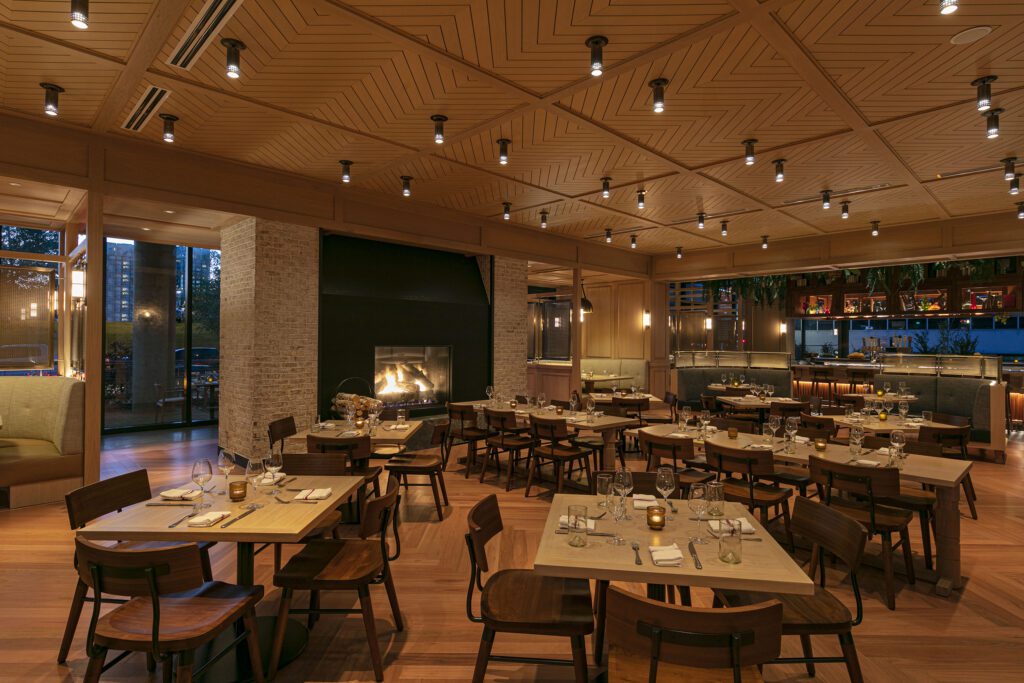
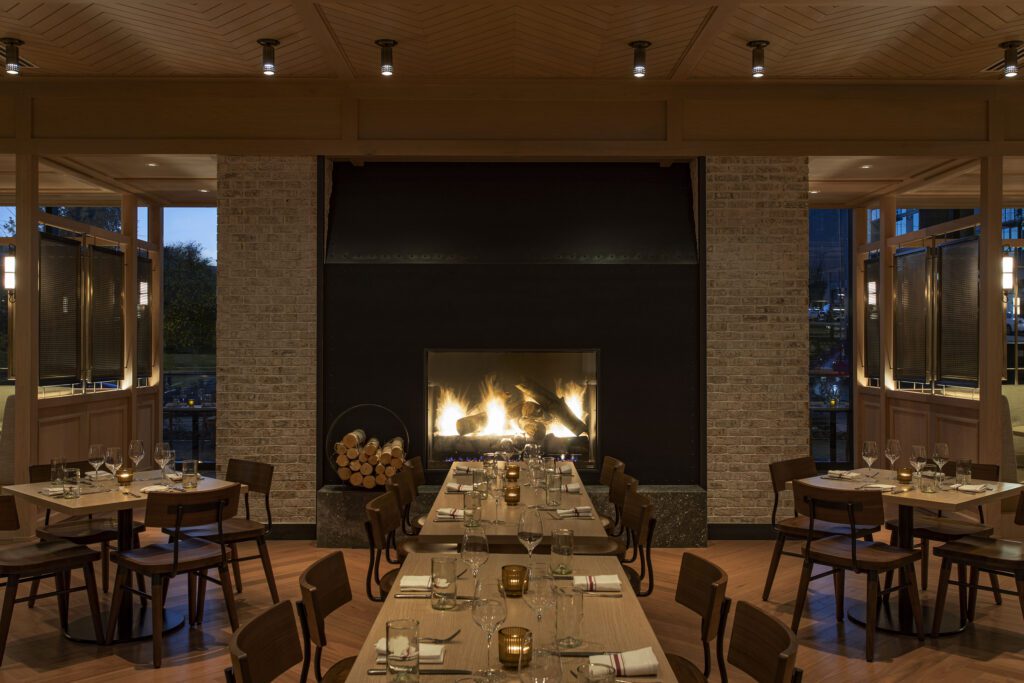
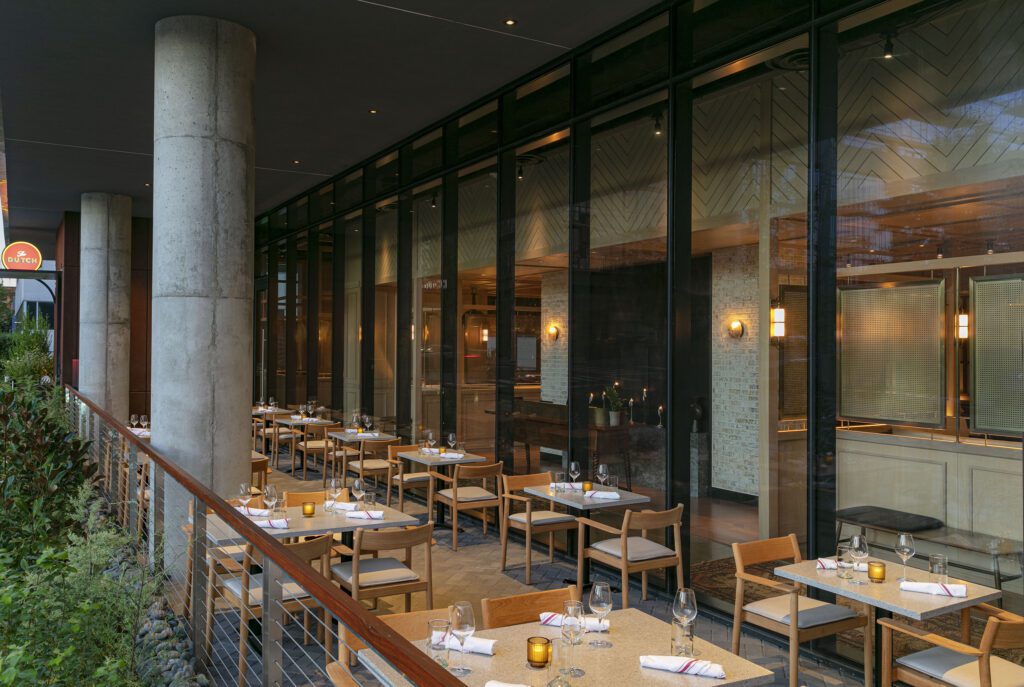
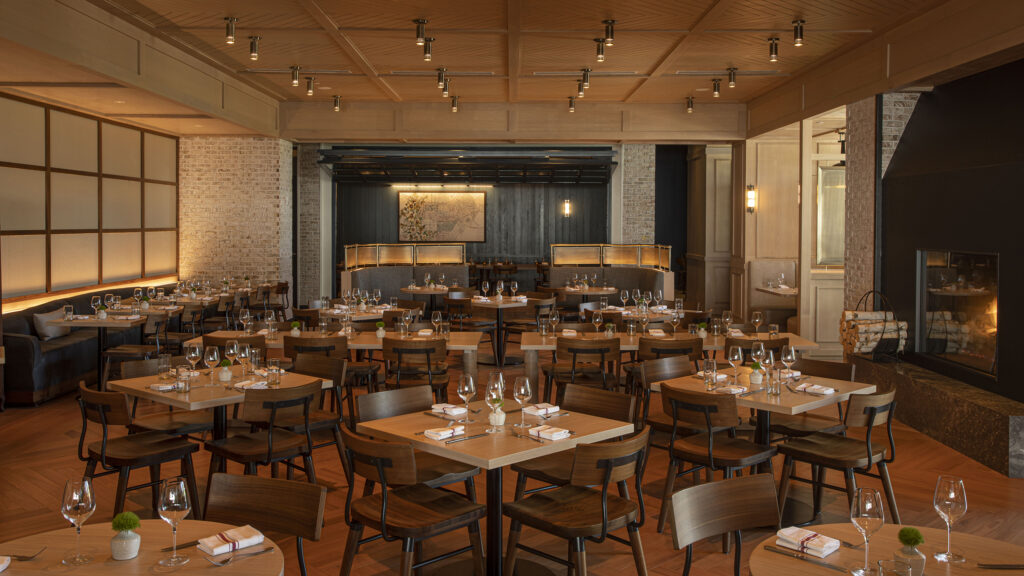
La marca W Hotel siempre ha ofrecido un ambiente sofisticado y exclusivo con cada hotel de destino o estilo de vida que ha imaginado, pero el W Nashville, de 14 plantas y 346 habitaciones, puede haber establecido un nuevo listón de excelencia. Situado en el barrio de Gulch, en Nashville (Tennessee), el nuevo concepto de la marca W Hotels de Marriott International pretende atraer tanto a visitantes como a lugareños ofreciendo experiencias únicas en el propio hotel que encarnen la narrativa de Music City. Una de las principales características del hotel es el restaurante The Dutch, un restaurante americano moderno de 150 plazas del ganador del premio James Beard, Andrew Carmellini. Diseñado por Rockwell Group, con sede en Nueva York, el restaurante cuenta con una gran barra en isla repleta de vegetación, una imponente chimenea central, múltiples opciones de asientos y un singular techo de madera chevron -segmentado al estilo de tablas y listones- que subraya el enfoque moderno pero auténtico adoptado tanto en la cocina como fuera de ella.
DESAFÍO Y ACCIÓN
The original design for the wood ceiling system consisted of individual acoustical wood planks, supplied loose, that would then be cut, edge banded, finished, and assembled into a complex herringbone pattern in-field. While achievable, in-field fabrication leaves significant room for error due to traditionally simplistic on-site equipment, ever-changing field conditions, and larger tolerances during assembly. Additionally, the herringbone pattern provided for an added level of difficulty due to the overlapping layout of individual wood ceiling planks. Believing there to be a great benefit to both the installer and end-user in opting for a fully fabricated system, Rulon International, in partnership with the installing contractor, presented an option for fully-assembled panels reconfigured into a chevron pattern and supplied in an A/B paired module to maintain the overall aesthetic of the design. This approach allowed each module A and module B panel, constructed from individual wood planks attached to a routed wood backer panel, to be cut to overall size in-field and directly attached to the deck above, drastically reducing the in-field labor required for fabrication and assembly. The routed wood backer panels have the additional benefit of allowing sound to pass through the white-felt reveals and be trapped in the plenum above, attenuating the overall sound profile of the often lively dining room. Additionally, the change from a herringbone pattern to a chevron pattern limited the complexity of the assembly process, but maintained the overall design aesthetic. The simplified design of the ceiling panels resulted in a beautiful, sound-attenuating wood ceiling system that will continue to be a centerpiece of The Dutch restaurant for the foreseeable future.