


Due to the natural properties of wood, variations in grain, texture, color, and surface appearance should be expected.
Download the PDF version for a full list of standard finishes.
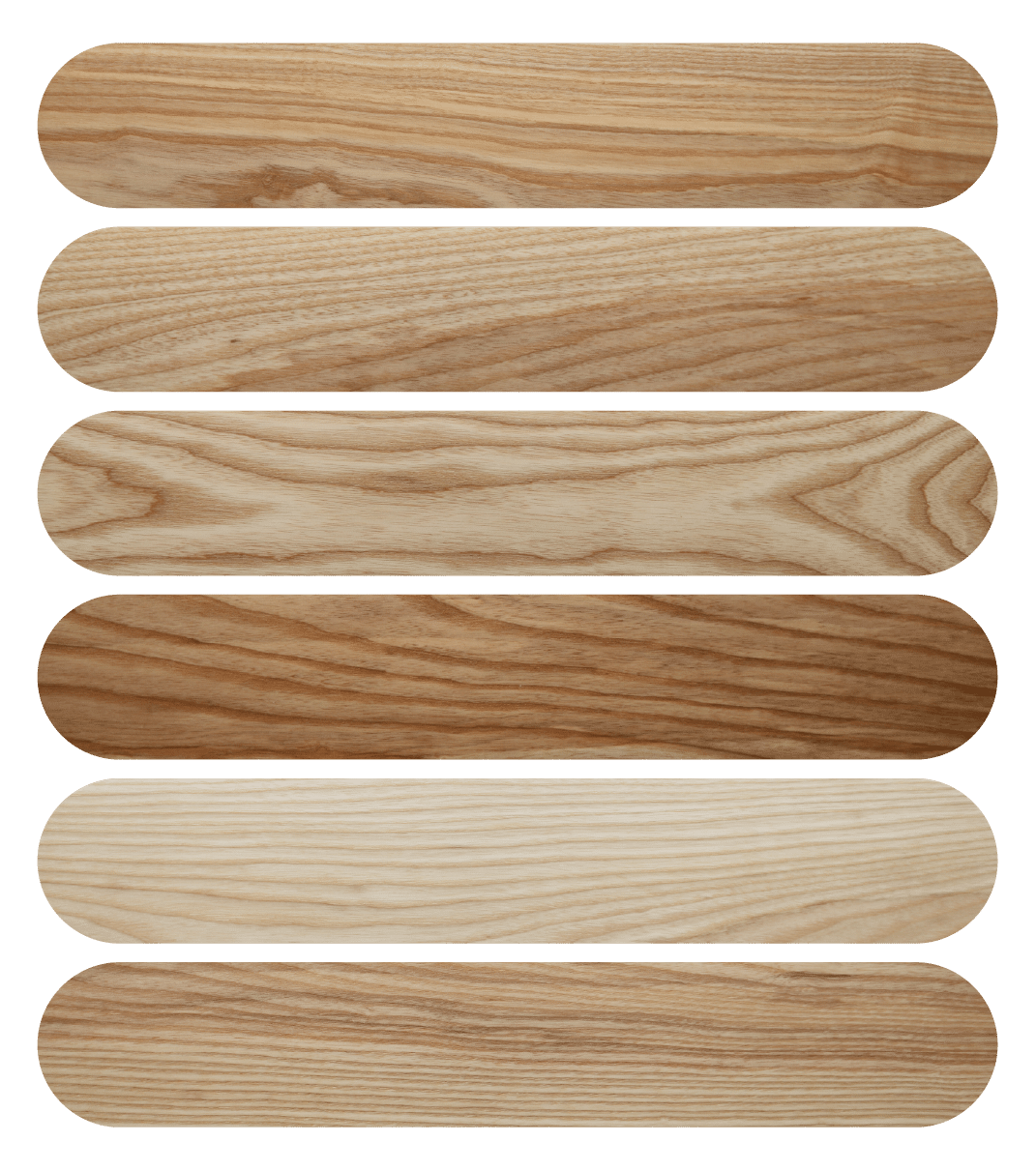
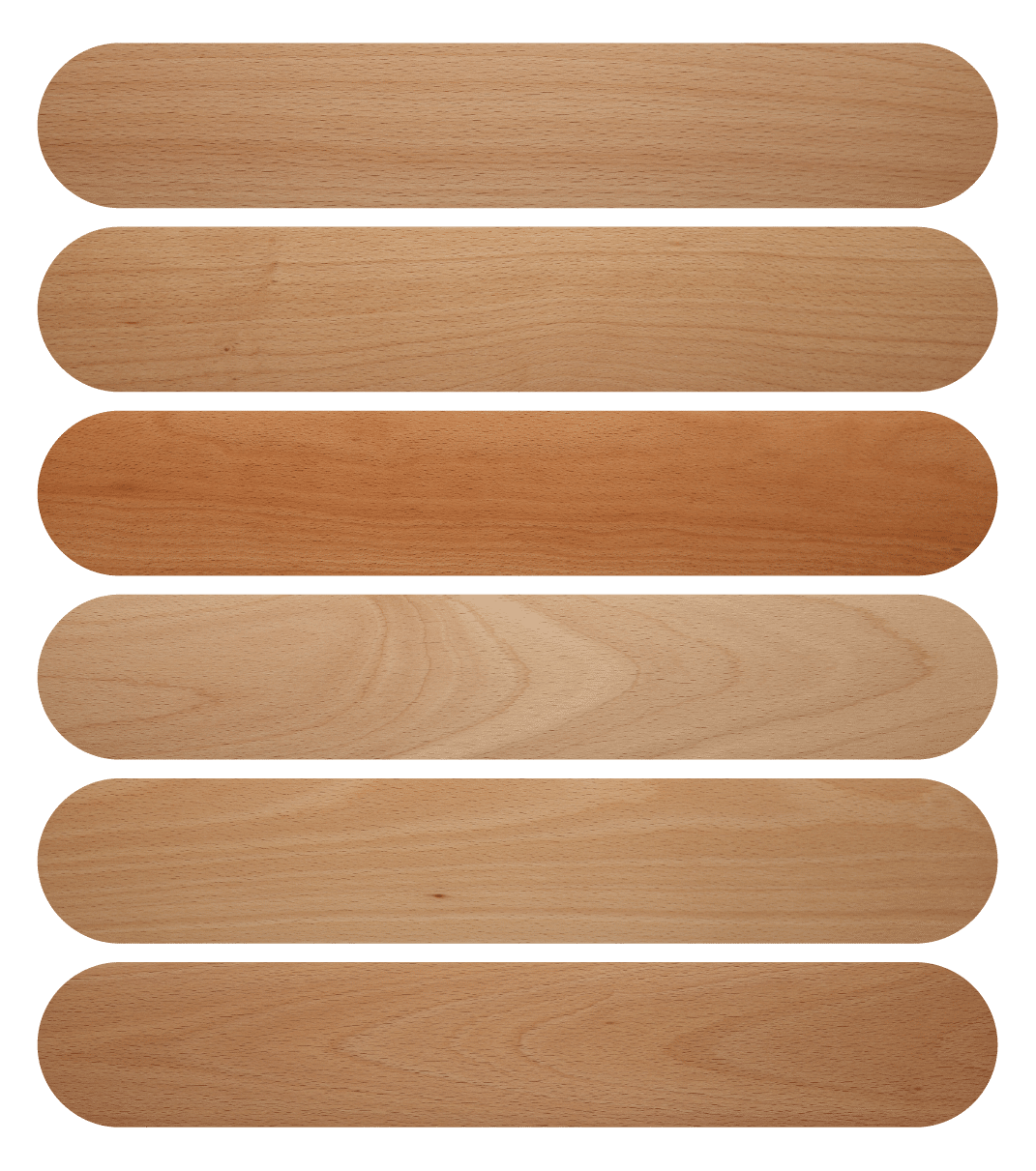
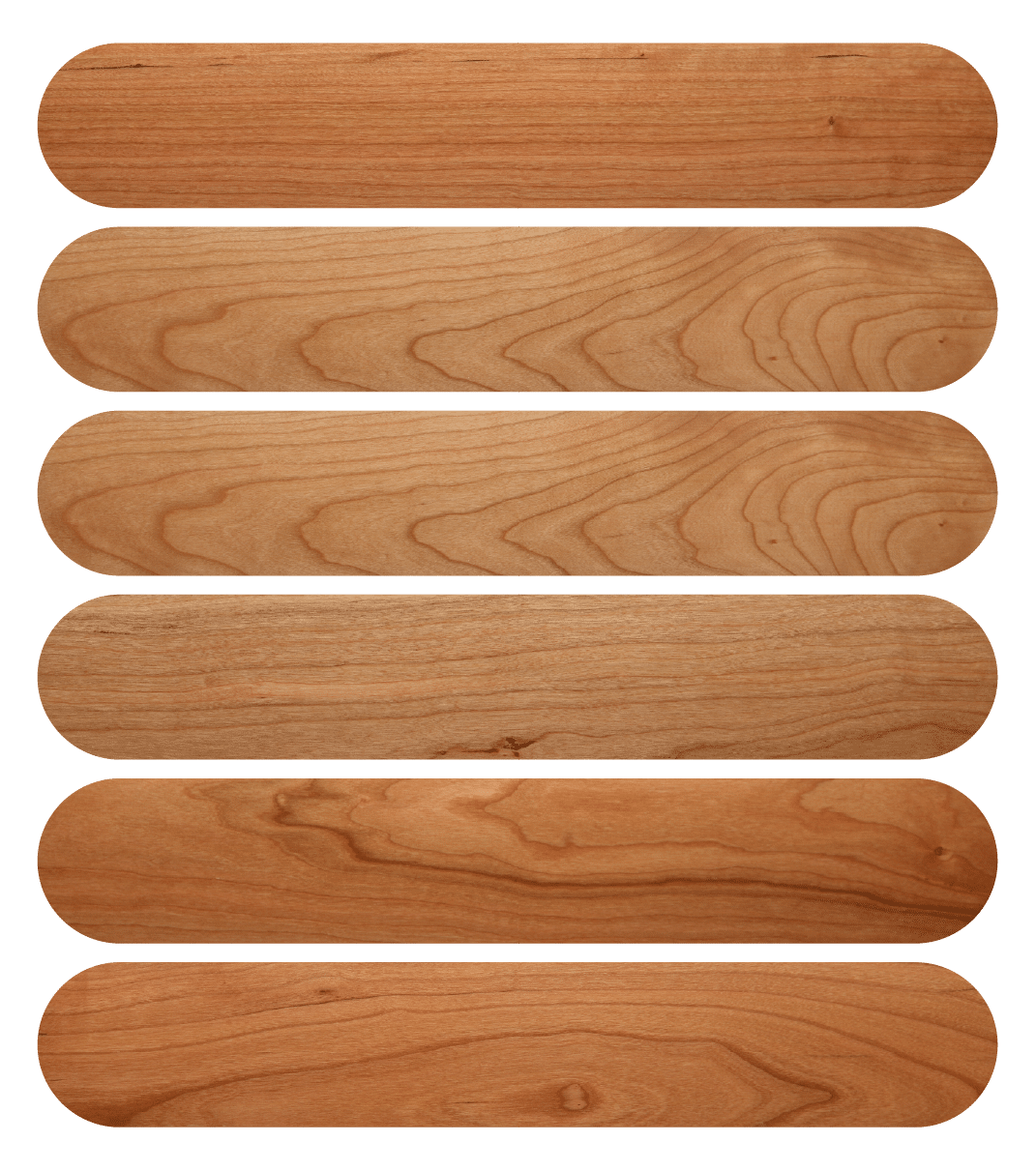
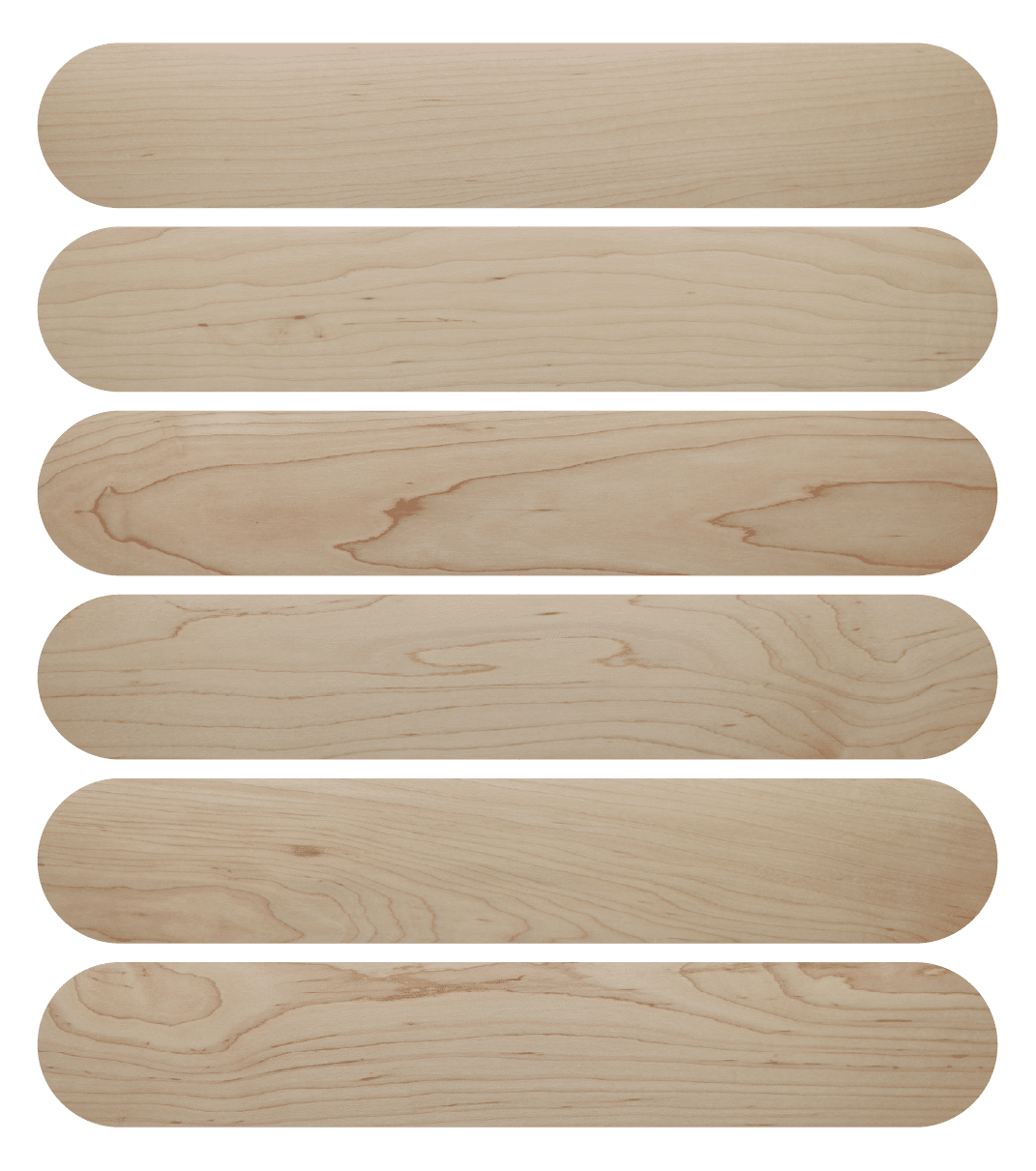
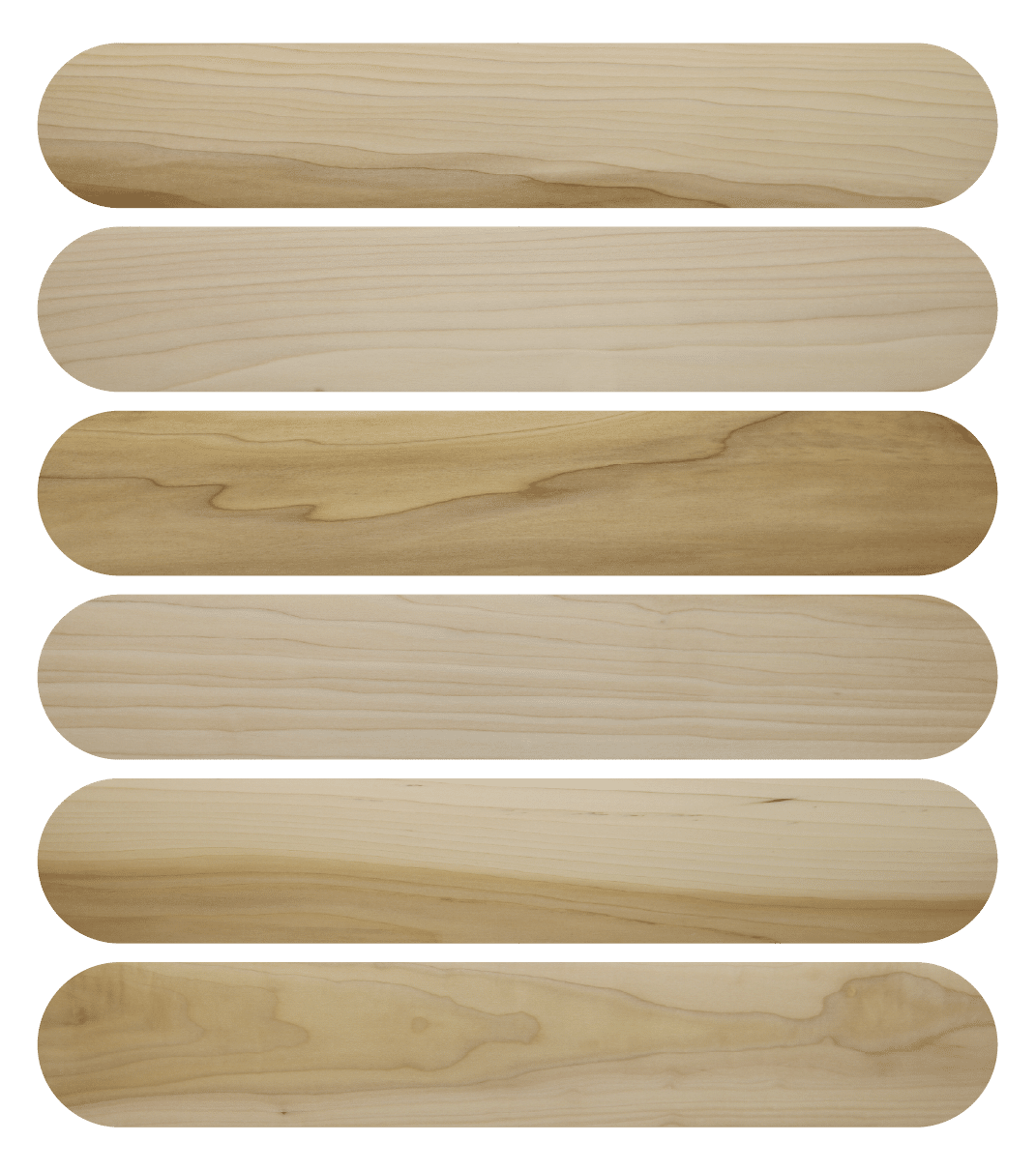
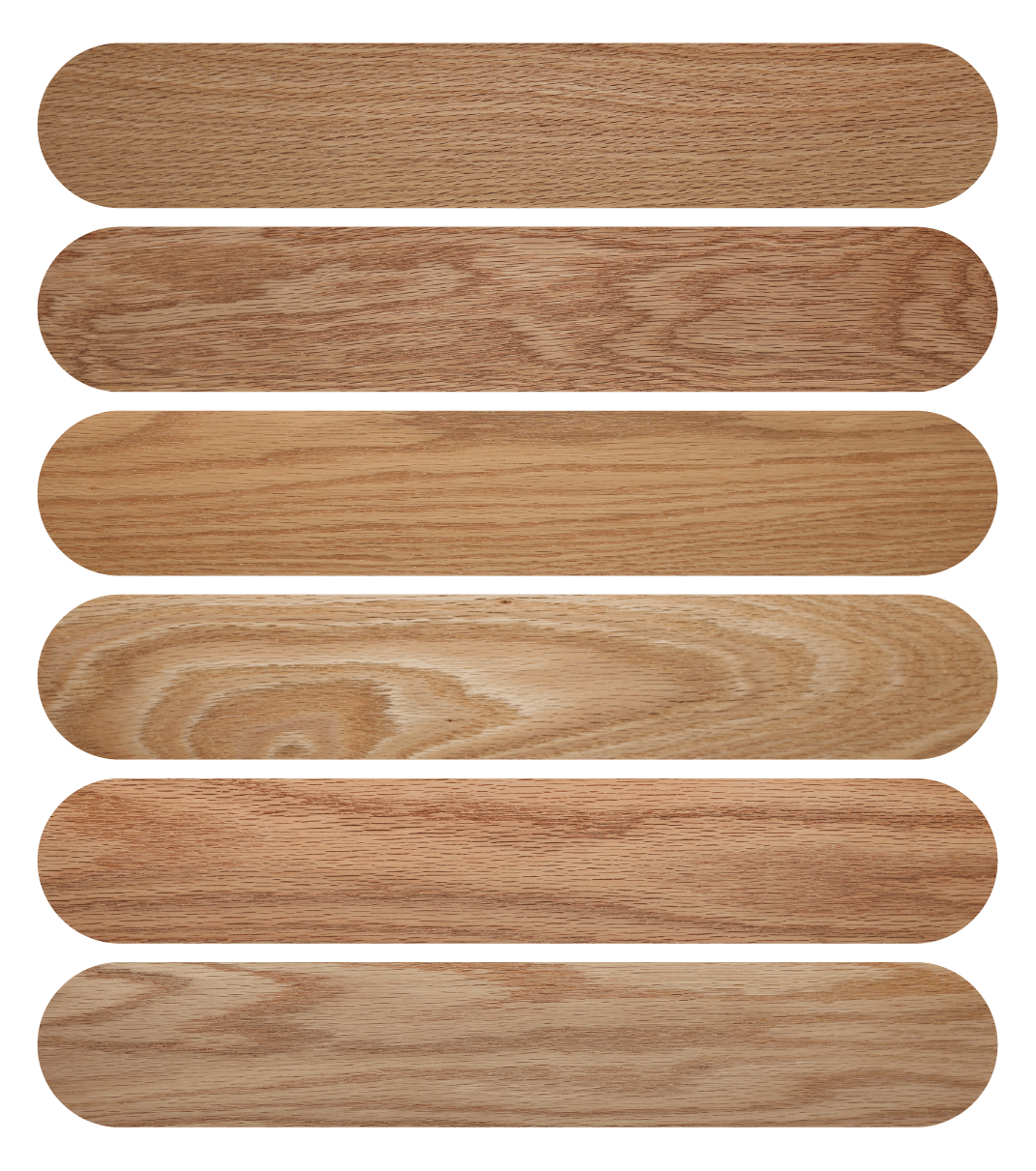
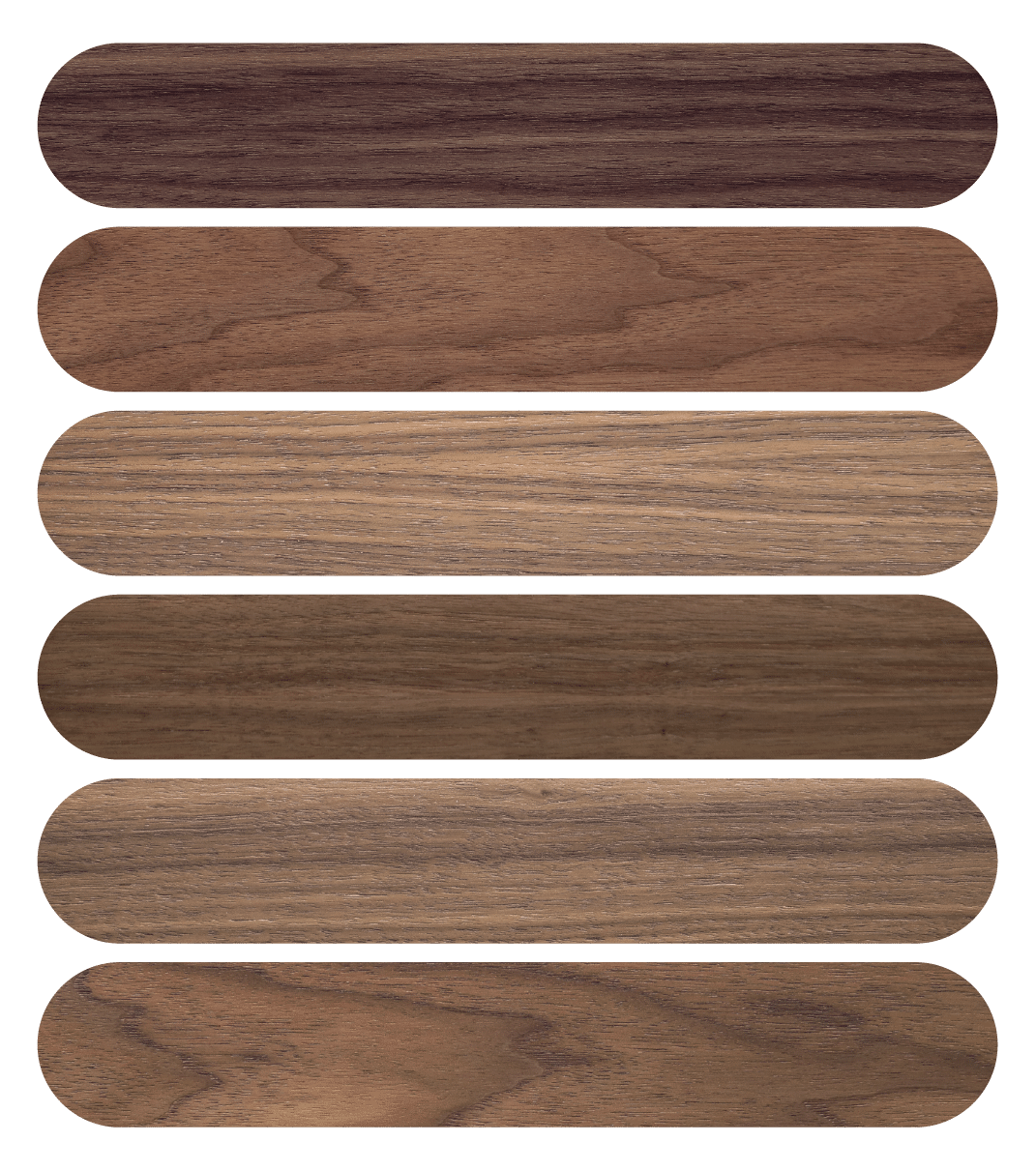
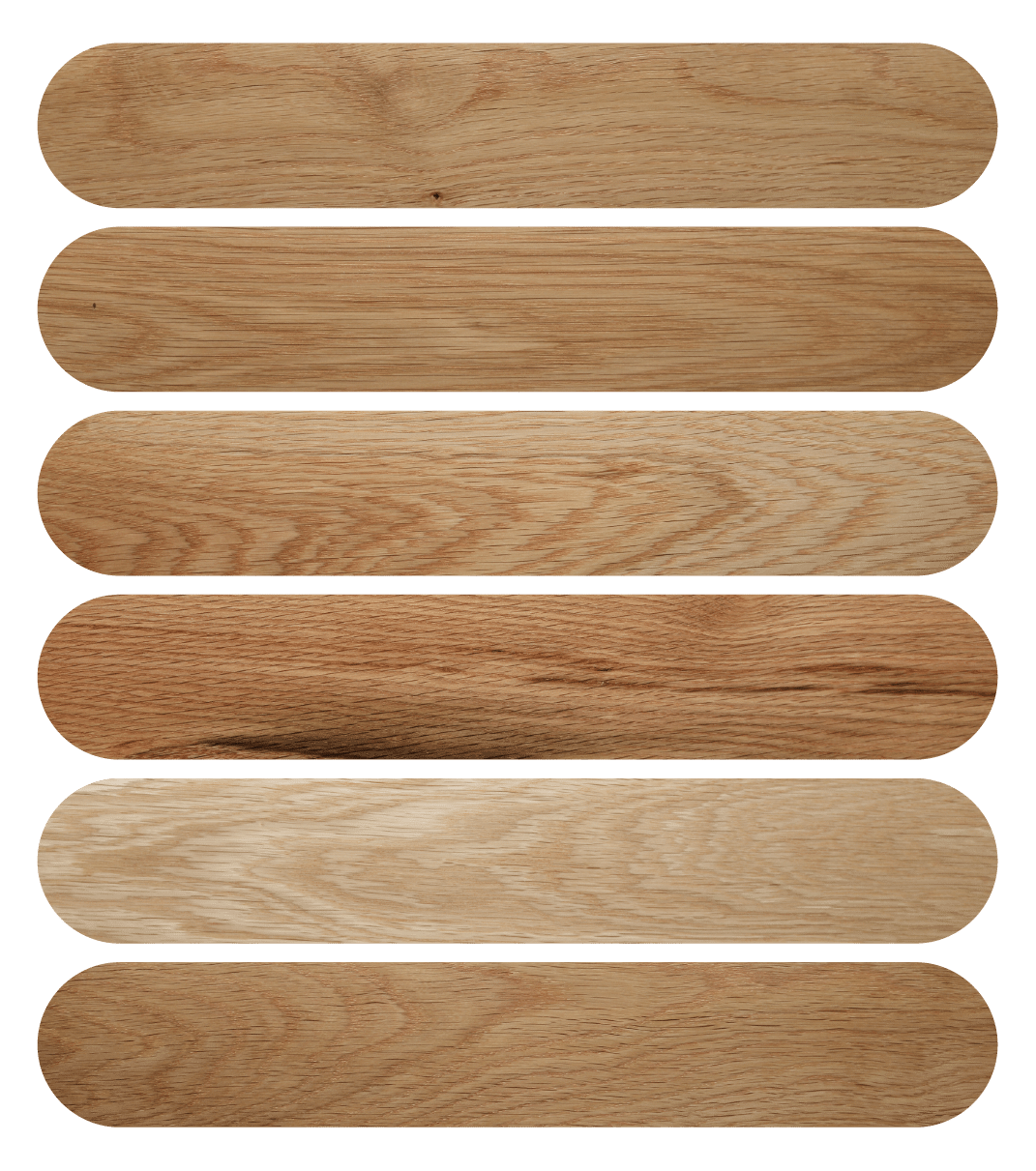
Color Variation - The natural range of visual differences within a wood species, including differences in tone, figure, streaking, and board-to-board consistency. Color variation is shown on a visual scale from None to Extreme, with lower values indicating a more uniform appearance and higher values indicating greater natural variation.
Grain Variation - The natural differences in wood fiber orientation, texture, and surface character within a species. Grain may be regular, straight, wavy, spiral, interlocked, or irregular, each affecting appearance, machining, and finishing. Grain variation is shown on a visual scale from None to Extreme, with lower values indicating more consistent grain and higher values indicating more pronounced figure or irregularity.
Shrink/Swell* - How wood expands or contracts with changes in moisture. Measured by the tangential-to-radial (T/R) shrinkage ratio from 1.0 to 3.0, lower values indicate more uniform movement, while higher values indicate greater potential for warping, cupping, and other dimensional changes. Applies to solid wood only.
Hardness* - A wood species’ resistance to dents and surface wear. Measured using the Janka hardness scale from 500 to 1,500 lbf, higher values indicate greater durability but potentially more difficult machining and modification. Applies to solid wood only.
Weight* - Wood weight per square foot at 3/4” thickness and approximately 12% moisture content. Measured from 1.5 to 3.5 lb/ft², lower values indicate lighter species, while higher values indicate denser, typically harder wood. Applies to solid wood only. Veneered systems average 3 lb/ft².
* - Applies to solid wood only.
Título
Nombre del arquitecto:
Ubicación del proyecto:
Nombre del producto:
Notas/Créditos:
Estudio de caso: