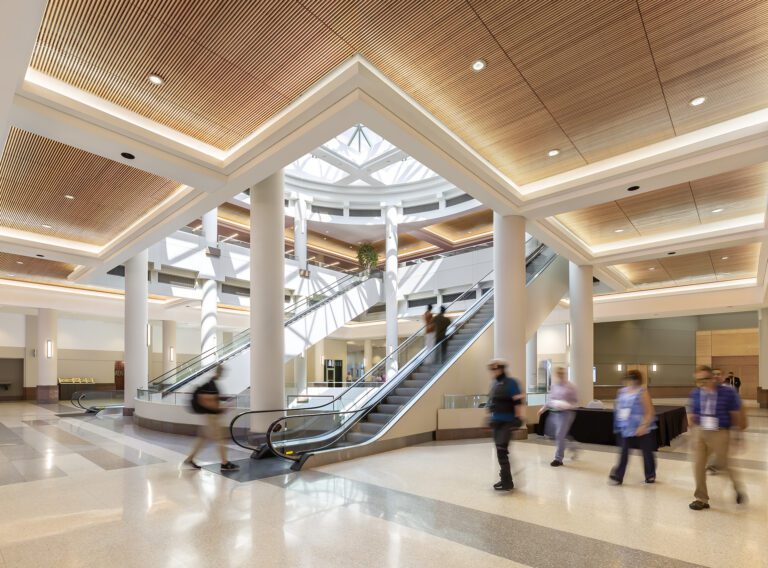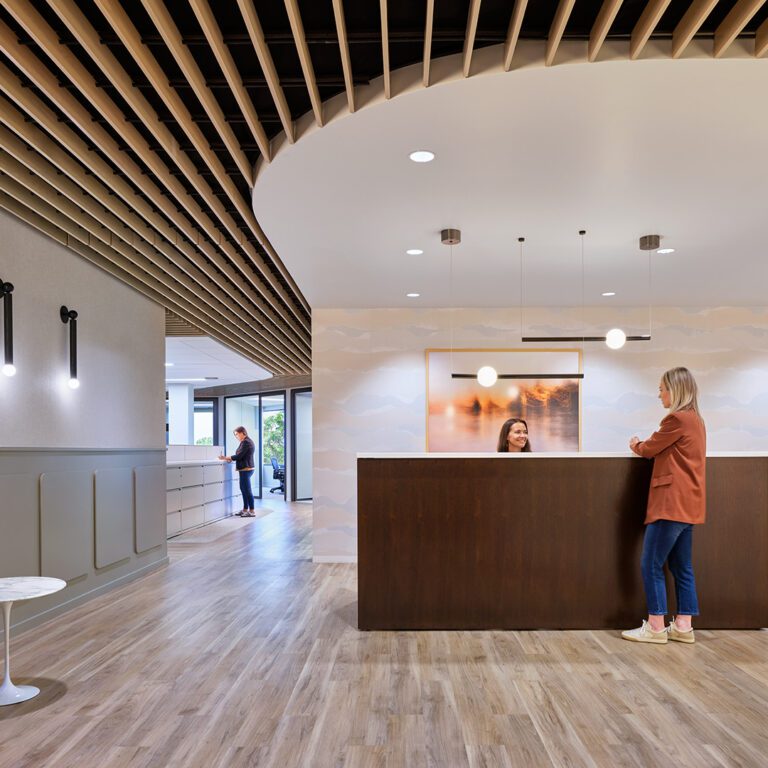
The acoustic ceiling tile grid has served commercial buildings for decades. It conceals infrastructure, provides acoustic control, and offers economical installation. But walk into a renovated corporate headquarters, a chef-driven restaurant, or a flagship retail space, and the overhead plane tells a different story than it did five years ago. The familiar 2×4 grid has given way to ceiling systems that deliver acoustic control and infrastructure concealment without the institutional aesthetic that standard grids create.
This shift isn’t about abandoning function for form. The best drop ceiling alternatives solve the same practical problems while opening new design possibilities. Understanding what drives this change and which systems deliver on both fronts helps you make specifications that satisfy clients seeking something beyond standard ceiling tile.
Why Designers Move Beyond Traditional Drop Ceilings
Before specifying drop ceiling alternatives, understanding what drives designers away from standard systems helps clarify which solutions address real project needs.
Standard suspended ceiling systems work. They wouldn’t dominate commercial construction otherwise. But they also create limitations that frustrate architects working on projects with higher design ambitions.
The Height Problem. Drop ceiling systems consume 4-8 inches of clear height, sometimes more when accommodating deep light fixtures or other ceiling-mounted building systems. In buildings with limited floor-to-floor height, this matters tremendously. Losing 6 inches might push the ceiling below 9 feet, making spaces feel compressed.
Adaptive reuse projects and renovations of older buildings face this challenge acutely. Original ceiling heights that felt generous can become cramped once modern systems and a suspended ceiling eat into the volume.
Visual Sameness. The 2×4 grid registers as institutional by default—visual shorthand for budget constraints rather than design intention. Clients seeking to attract top-tier tenants or project brand differentiation require ceiling planes that support rather than undermine spatial character.
Access Trade-offs. Individual tile removal provides excellent access, but the grid itself creates a visual framework that dominates the ceiling plane. Even when using decorative tiles, the grid lines remain prominent. Some designers want infrastructure concealment without the visual reminder that concealment is happening.
Acoustic Limitations. Standard ceiling tiles provide adequate sound absorption (NRC 0.55-0.75), but offer limited sound blocking capability (CAC typically 25-35) through shared plenums. In open-plan offices where confidential conversations must remain private, this ceiling attenuation limitation creates problems standard ACT cannot solve without significant upgrades.
Wood Linear Systems: The Leading Alternative
Among drop ceiling alternatives, wood linear systems have gained the most traction in projects where design quality affects tenant attraction and brand perception.
How They Work. Wood planks mount to a suspension system via clip rails, wood backers, or direct attachment. The planks can run continuously across large areas or organize into panels for easier handling and installation. Spacing between planks (in open systems) or tight fitting (in closed systems) creates different visual effects and acoustic behaviors.
The materials themselves contribute to performance. Wood naturally dampens sound compared to hard, reflective surfaces. When combined with strategic spacing or perforations and backing materials, wood systems achieve NRC ratings from 0.55 to 0.85, matching or exceeding standard acoustic tiles.
Rulon’s Linear systems exemplify this approach, offering both open and closed configurations engineered for documented acoustic performance.
Visual Impact. Wood conveys material authenticity that synthetic alternatives cannot replicate. Natural grain patterns establish organic variation that prevents monotony across large ceiling planes. Different wood species, stain colors, and plank arrangements allow customization that makes each project unique.
The dimensional quality matters too. Where tiles sit in a plane, wood planks introduce dimensional depth through material thickness and the shadows between them. This three-dimensional character catches light differently throughout the day, adding subtle movement to what could otherwise be static overhead.
Practical Considerations. Wood ceiling systems cost more than standard ACT. The material itself carries higher costs, and installation requires more skilled labor. Budget-conscious projects need to evaluate whether the visual impact justifies the premium.
Building conditions matter too. Wood responds to humidity changes. Properly engineered systems account for this through material selection, finishing, and installation details. Spaces with extreme or rapidly cycling humidity need careful specification. Most manufacturers offer guidance on appropriate applications.
Fire ratings require treatment for commercial use. Fire-retardant treatments allow wood products to achieve Class A ratings, meeting code requirements while maintaining the natural appearance that makes wood desirable. For projects pursuing sustainability goals, FSC-certified wood options achieve Class A fire ratings while supporting LEED Materials and Resources credits.
At the University of South Florida Judy Genshaft Honors College, the design team specified Aluratone acoustic panels alongside Grille systems to manage acoustics across open study areas and collaborative spaces—demonstrating how alternative ceiling systems address performance requirements that standard ACT cannot meet. See case studies for detailed project examples.
Metal Architectural Systems
Metal offers durability and a distinct aesthetic that suits certain project types particularly well.
Linear Metal Ceilings. Aluminum linear systems deliver the precise, clean aesthetic transit facilities and technology campuses require. The material’s strength allows for long unsupported spans that wood can’t match at comparable sizes.
Systems like Rulon’s Endure™ Linear—the product line used at Shake Shack installations—deliver this performance with engineered polymer construction that requires minimal maintenance in high-traffic commercial environments.
Perforated metal panels combine the material’s durability with acoustic absorption. Micro-perforations (small holes often barely visible at normal viewing distances) allow sound to pass through to backing material while maintaining a relatively solid appearance.
Open-Cell Metal Systems. Expanded metal, mesh panels, and open-grid designs create visual texture while allowing air circulation and easy integration of lighting and sprinkler systems. These systems work well in spaces wanting an industrial or technical aesthetic.
The transparency of open systems means the plenum above needs addressing. Painting the deck and infrastructure a coordinated color or flat black makes them recede. Some projects embrace the exposed systems, treating ductwork and structure as design elements.
Finish Flexibility. Powder coating puts virtually any color on metal surfaces. Anodizing creates metallic sheens ranging from natural aluminum to bronze, black, or custom tones. Perforated metals can receive printed graphics or patterns for additional customization.
Metal ceilings demand minimal maintenance. They don’t warp, support mold growth, or degrade from moisture exposure. This makes them suitable for challenging environments like indoor pools, commercial kitchens, and coastal locations where other materials might struggle.
Architectural Panel and Baffle Systems
Moving beyond linear formats opens additional possibilities for ceiling design.
Panel Systems. Flat Veneer Panels can be sized to match room proportions or create specific layout patterns rather than conforming to standardized grid dimensions.
Perforated acoustic panels combine sound absorption with visual interest. The perforation patterns can be functional only (optimizing acoustic performance) or decorative (creating images or patterns through varied hole sizes and spacing). This merges art and performance in ways standard tiles can’t achieve.
Baffle and Cloud Systems. Baffle systems hanging vertically from above increase acoustic surface area compared to horizontal ceilings of the same footprint while allowing air circulation and natural lighting integration.
Acoustic clouds (horizontal elements suspended at various heights) articulate spatial boundaries without physical walls. A restaurant might use clouds over dining areas while leaving circulation zones more open. Retail spaces use clouds to guide circulation or highlight merchandise areas.
The W Hotel Nashville demonstrates this principle: Rulon’s Linear Panelized system in a chevron, board-and-batten pattern establishes the Dutch restaurant’s connection to Music City’s authentic character while controlling acoustics across the 150-seat space—an outcome impossible with standard ceiling tile.
These systems typically leave the deck above partially visible. This can reduce costs by eliminating full ceiling coverage, but it means the deck, structure, and MEP systems need finishing or strategic painting.
Grille Systems. Grille systems with ladder-like blade arrangements create rhythm through repetition while providing acoustic absorption when backed with appropriate materials.
Grilles work particularly well in spaces with high ceilings where occupants view the ceiling at an angle. The blade depth creates depth and shadow that reads well from below while the open structure keeps the system from feeling heavy.
At the Richard Gilder Center for Science, Education, and Innovation at the American Museum of Natural History, Rulon’s Baffle system met Studio Gang’s challenge of blending architectural precision with nature-inspired design—proof that alternative ceiling systems perform at the highest level of cultural architecture.
Hybrid Approaches: Getting the Best of Both
Some projects benefit from strategic combinations rather than committing entirely to drop ceiling alternatives throughout.
Zoning Different Areas. Open collaboration areas might use architectural wood systems, while private offices or conference rooms use standard tiles for economy. This concentrates budget on public spaces while meeting functional needs elsewhere.
Vertical zoning works too. Lower-level public spaces receive premium treatments. Upper floors use more economical solutions. This makes sense in mixed-use buildings or office towers where different tenants have different expectations.
Feature Areas Within Tile Fields. Rather than replacing the entire ceiling, create focal areas with alternative systems. A reception desk might have a wood ceiling element extending above it while surrounding areas use standard tiles. Conference rooms get upgraded ceilings while support spaces remain basic.
This strategy controls costs while achieving visual impact where it matters most. The contrast between standard and premium draws attention to the upgraded areas, actually enhancing their effect. View examples of this approach in Rulon’s project gallery.
Certification Value Beyond Compliance
Drop ceiling alternatives increasingly support green building certification as LEED v5 emphasizes lifecycle thinking and material transparency. Wood systems from FSC-certified sources contribute to Materials and Resources credits while storing biogenic carbon. Alternative ceiling systems provide straightforward paths to credits through Environmental Product Declarations (EPDs), Health Product Declarations (HPDs), and material ingredient transparency.
For building owners, certification delivers measurable returns. LEED-certified buildings command higher asset values, increased occupancy rates, and rental premiums compared to non-certified equivalents. The U.S. Green Building Council’s expanded LEED v5 framework recognizes that specification decisions for ceiling systems directly impact certification pathways. Rulon’s sustainability commitments detail specific certifications and responsible sourcing practices supporting these goals.
Making Alternative Systems Work
Selecting a drop ceiling alternative requires addressing practical considerations that don’t arise with standard systems.
Access Planning. Without the inherent access of tile systems, you need intentional strategies. Access panels at key service points (valve locations, electrical boxes) provide openings without disrupting large ceiling areas. Panelized systems where entire panels can be removed balance clean appearance with maintenance needs.
Plan access panel locations during design development, not during installation. Coordinate with valve locations, electrical junction boxes, and fire damper access points. For linear systems, specify removable sections at 10-12 foot intervals rather than relying on complete disassembly for routine maintenance.
Coordinating with Lighting and Fire Protection. Alternative ceiling systems require dimensional coordination that standard grid systems accommodate through inherent flexibility. Establish ceiling module and runner spacing early. Share layouts with lighting designers to align downlight locations with plank runs or panel edges. Identify sprinkler drop locations and detail how they integrate visually—penetrations through wood planks or metal panels require more planning than dropping through tile.
Coordinate ceiling layouts with lighting designers and fire protection engineers early. Identify conflicts before construction. This front-loaded effort pays off in smoother installation and better results.
Budget Reality. Most alternatives to drop ceilings cost more than standard ACT. Material costs increase. Labor rates rise for specialized installation. Value analysis should account for tenant retention rates, achievable rental premiums, and brand positioning—metrics that standard first-cost comparisons overlook.
Projects prioritizing first cost over lifecycle value or design impact remain well-served by standard ACT systems. For projects where design quality affects tenant attraction, brand perception, or occupant satisfaction, the premium pays returns.
Choosing Your Path Forward
If acoustic performance matters most, focus on systems with documented NRC and CAC values. Wood systems with proper backing and metal systems with perforations can match or exceed standard tiles.
If budget constrains options, consider hybrid approaches or focusing upgrades on the most visible or important spaces. Complete replacement of standard ceilings might not be necessary to achieve significantly better results.
If sustainability drives decisions, look for FSC-certified wood, recycled metal content, and systems with comprehensive environmental documentation. These products support green building goals while delivering on performance and aesthetics.
The commercial ceiling landscape offers far more than the standard grid. These alternatives solve real functional problems while creating spaces that feel intentional and refined. Performance requirements and design ambitions both demand specification strategies beyond default solutions. The alternative ceiling systems detailed here provide proven pathways to superior outcomes.Explore specification-ready configurations through Select-N-Ship for accelerated delivery, or contact Rulon at 904-584-1400 for project-specific guidance on alternative ceiling systems.