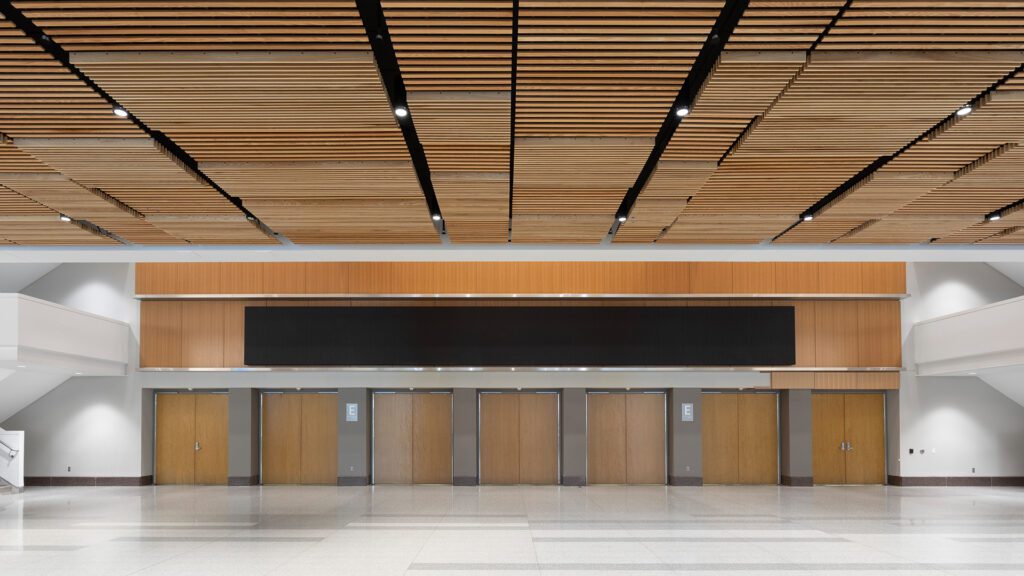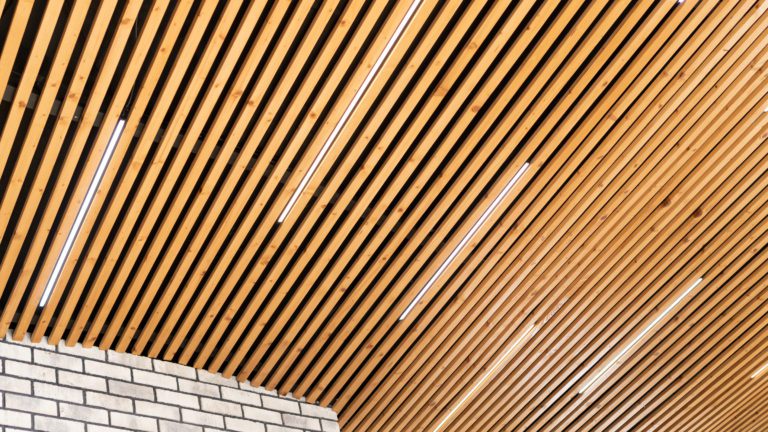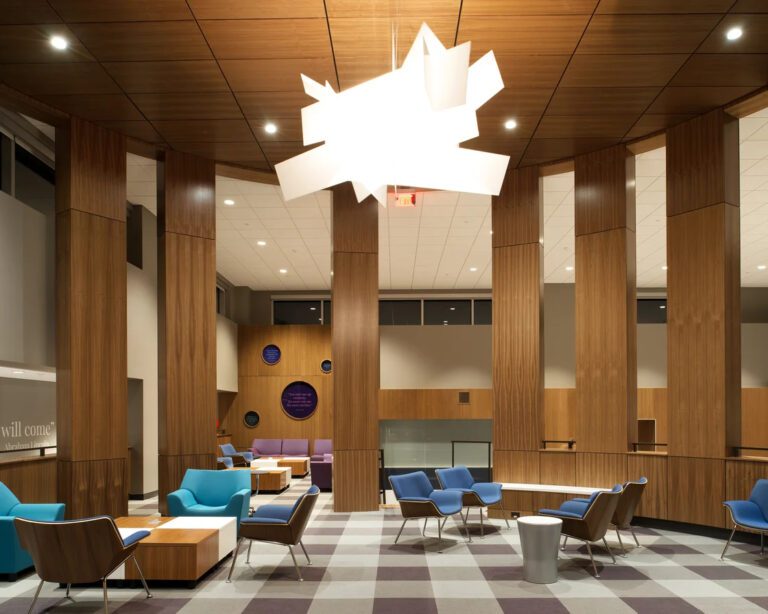
Ceilings and walls form the foundation for shaping the sensory and functional qualities of commercial interiors. In high-performance environments—including educational institutions, healthcare facilities, and corporate offices—the integration of wood surfaces with advanced textiles supports acoustic optimization and visual depth. Real-world project results show how this combination enhances occupant experience, balancing technical needs with refined design.
Pairing Wood and Textiles for Depth, Contrast, and Functionality
The interplay of wood and textiles in commercial interiors creates a nuanced palette of textures, tones, and tactile sensations. Wood ceiling and wall systems bring structural clarity and natural resonance, while textiles add softness, color variation, and targeted sound absorption.
Recent projects on higher education campuses paired engineered wood panels with acoustic felt installations to create layered environments that reduce reverberation and improve speech intelligibility, supporting collaborative learning. For a closer look at how these strategies work in practice, explore Rulon’s perspective onimproving sound quality with wooden acoustic panels.
This approach also applies to hospitality and cultural venues, where the contrast between precise wood grain and the flexibility of woven or upholstered elements adds physical comfort and visual richness. Designers introduce variation through bold or muted textile palettes, shifting the energy or calmness of a space to match the intended user experience.
How Textiles Enhance Wood-Based Interior Solutions
- Acoustic blankets and custom-fabricated felt panels reduce disruptive noise without compromising architectural intent.
- Upholstered elements like banquettes or drapery soften wood’s linear qualities and offer subtle branding opportunities through material choice.
- Carefully selected colors and patterns in textiles influence mood and perception, addressing occupants’ psychological needs in busy settings.
For example, a recent corporate headquarters project combined layered wood wall systems with neutral-toned textile baffles to create a harmonious acoustic profile that supports focused work and informal gatherings.
Enhancing Acoustics in Interiors & Textiles Applications
The combination of wood and textiles effectively improves the acoustic environment of commercial interiors. Independent testing of acoustic wood panels, such as Rulon International’s Curvatone line, confirms significant noise reduction. Adding textile-based sound treatments—like absorptive wall blankets or modular felt panels—further boosts performance, resulting in spaces with less echo and clearer audio transmission.
Architects and consultants have used large-scale wood and textile treatments in recording studios and lecture halls to demonstrate measurable improvements in sound clarity and occupant comfort. For deeper insights, see Rulon’s resource onlarge acoustic panels for recording environments, which explores how material choice and placement directly affect performance.
For a technical breakdown of how ceilings differ from walls in managing sound absorption and reflection, review Rulon’s discussion ofthe science of acoustic wood ceilings versus wall systems.
Sector-Specific Applications for Interiors & Textiles
- Corporate offices: Integrated wood paneling and textile elements reduce ambient distractions, enhancing productivity and well-being.
- Healthcare environments: Soft, antimicrobial textiles combined with durable wood create calming, easy-to-maintain spaces.
- Hospitality: Textured fabrics paired with wood offer a welcoming guest experience while meeting acoustic standards.
- Cultural and performance venues: Acoustic blankets and engineered wood surfaces improve audience and performer experience by managing sound reflection and absorption.
Sustainable Integration of Wood and Textiles in Commercial Design
Sustainability guides leading architecture and design firms. Choosing responsibly sourced wood and high-performance textiles ensures durability and environmental responsibility. In multi-phase educational projects, using rapidly renewable wood species and recycled-content acoustic fabrics has contributed to LEED certification and improved occupant satisfaction.
Designers can refresh interiors with textile updates while the wood structure provides decades of service. This supports evolving brand needs and seasonal changes without generating significant waste.
For teams aiming to boost acoustic performance while achieving environmental goals, Rulon’s analysis of theacoustic benefits of wood panels outlines material strategies that integrate seamlessly with textiles.
Rulon International’s Commitment to Thoughtful Interiors & Textiles Solutions
Professionals looking to elevate both the aesthetic and technical quality of their interiors & textiles projects consistently turn to Rulon International’s expertise. The Curvalon and Curvatone systems offer precision in design flexibility and acoustic control, integrating smoothly with a wide range of textile treatments. These solutions have been used in projects from performing arts centers to collaborative corporate spaces, meeting top standards for acoustics, sustainability, and occupant experience.
For detailed data on wood acoustics and integration strategies, Rulon International provides resources and case studies, including focused guidance onimproving sound quality with wooden acoustic panels.
Explore more possibilities in interiors & textiles by seeing how custom solutions from Rulon International are shaping the next generation of commercial environments.