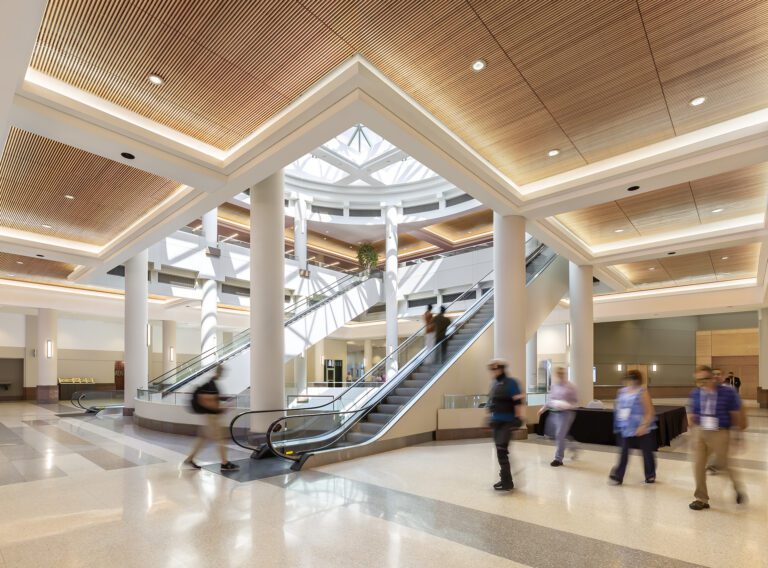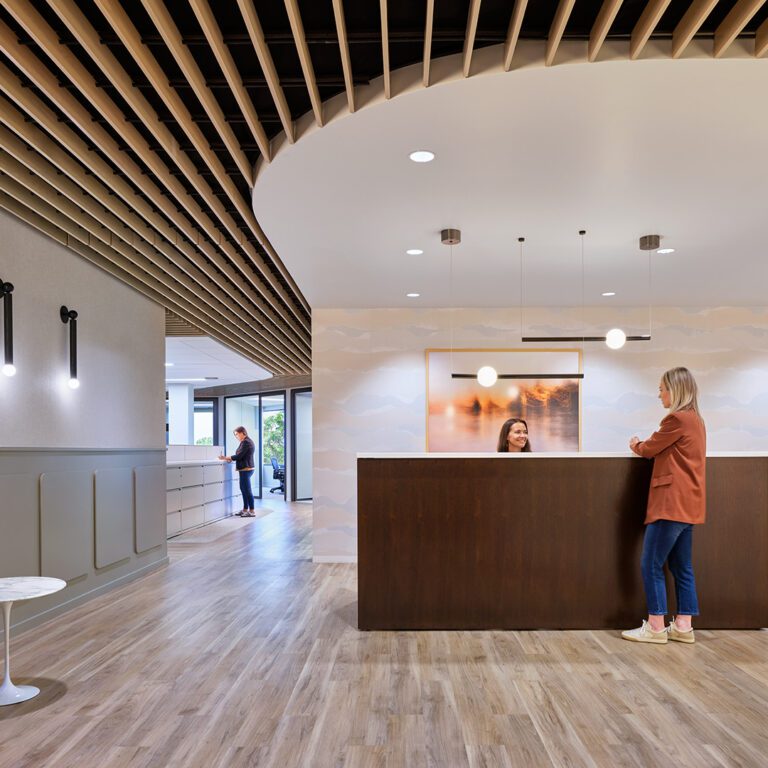
The ceiling finish you specify does more than determine color. It affects how light interacts with surfaces, how the material ages, how it performs in specific environments, and whether it maintains beauty or deteriorates over time. These decisions shape the space’s character and longevity.
For wood ceilings specifically (the finish category with the most complexity and variation), understanding species characteristics, stain behaviors, and protective coating options separates specifications that deliver on promises from those that disappoint. The right finish makes a $30-per-square-foot wood ceiling look intentional and refined. The wrong one makes it look like a mistake.
Specifying ceiling finishes for wood systems requires understanding how species, stain, and protective coatings interact to create lasting performance. Rulon’s range of wood ceiling products accommodates multiple species and finish approaches for commercial applications.
Understanding Wood Species for Ceiling Applications
Wood species selection forms the foundation of successful ceiling finishes, with each bringing inherent characteristics that finishing enhances but cannot fundamentally change. Each species accepts stain differently, exhibits distinct grain patterns, and brings color tendencies that influence the final appearance.
Western Hemlock
This softwood offers economy without sacrificing beauty. Hemlock’s light, neutral base with subtle golden undertones provides an excellent canvas for stain. The fine, uniform grain creates a consistent appearance across large ceiling installations where visual continuity matters.
Hemlock accepts stain uniformly, making it adaptable for achieving specific color targets. Light natural finishes showcase the wood’s subtle character. Dark stains transform it convincingly, allowing hemlock to mimic more expensive species. This flexibility makes it popular for budget-conscious projects seeking an elevated appearance.
Hemlock serves as the base material for man yLinear system installations where consistent stain acceptance matters.
The wood’s strength and workability support various ceiling system configurations. It machines cleanly, holds fasteners reliably, and resists splitting during installation. For commercial interiors not exposed to weather or extreme moisture, properly finished hemlock serves for decades.
Chêne blanc
White Oak has become the preferred option for many commercial ceiling projects. Its neutral, light tan to medium brown base color adapts to virtually any stain color, from pale whitewashed effects to deep, rich browns approaching walnut territory. The prominent, open grain adds depth and character at any finish level.
Quarter-sawn oak exhibits striking ray flecks that catch light and create visual interest. This grain visibility means the wood remains recognizable as a natural material rather than looking painted or synthetic.
White Oak’s density provides durability. It resists denting and surface damage better than softer woods. This matters in commercial environments where maintenance work occasionally brings tools and equipment into contact with ceiling surfaces. The material’s inherent moisture resistance (greater than red oak) also contributes to dimensional stability.
White Oak’s versatility makes it a preferred species across Rulon’s product lines, from Linear to Grilles.
Cerise
Cherry delivers chromatic depth and warmth unmatched by lighter species. The wood’s natural reddish-brown color creates immediate visual impact even with clear finishes. Over time, cherry darkens and deepens, developing complex undertones that enhance rather than degrade its appearance.
This photochemical aging requires upfront client communication. Samples shown during specification represent the initial appearance. The ceiling will look different—and arguably better—after months of exposure to light. For clients comfortable with this evolution, cherry delivers unmatched beauty. Those wanting static color might prefer other species.
Cherry’s closed grain means less pronounced grain patterns than oak. This creates a smoother, more refined appearance that suits traditional and upscale contemporary interiors. Staining cherry darker is straightforward. Staining it lighter fights the wood’s natural color and rarely succeeds convincingly.
The wood pairs beautifully with warm color palettes and natural materials. It complements stone, warm metals like bronze, and earth-toned finishes. Cherry reads as premium material immediately, supporting projects where material quality matters to brand perception or occupant satisfaction.
Cherry specifications work particularly well in Flat Veneer Panels where the wood’s refined grain creates sophisticated monolithic surfaces.
Noyer
Walnut’s chocolate-brown base with purple or gray undertones establishes immediate material luxury. The natural variation within boards creates visual interest without artificial enhancement. Clear or lightly tinted finishes allow this natural beauty to dominate.
The wood’s color limits stain flexibility. Walnut works beautifully for darker finishes, but can’t be stained lighter effectively. This specialization is fine when dark wood aligns with design intent. For projects requiring finish flexibility, other species serve better.
Walnut’s straight grain with subtle figure creates a sophisticated appearance. The wood feels refined rather than rustic, suiting high-end installations. Cost reflects this positioning. Walnut consistently ranks among the more expensive species, though its distinctive appearance justifies the premium for appropriate projects.
The Mott Branch Library demonstrates finish durability in public facilities—the installation’s material consistency and protective coatings handle complex conditions while maintaining visual quality.
White Maple
Maple offers the palest base of common ceiling woods. The creamy color with subtle yellow undertones creates clean, light aesthetic perfect for Scandinavian-inspired or minimalist interiors. Maple’s minimal color variation ensures consistency across large installations.
The tight, fine grain produces a sleek, refined appearance. Unlike oak’s prominent grain, maple remains subtle. This characteristic makes maple ideal for opaque or solid-color finishes. When painted white, black, or custom colors, maple provides a uniform base that doesn’t show through.
Maple provides the substrate for custom-colored applications in projects requiring specific brand colors or architectural coordination.
Maple’s staining behavior requires understanding. The wood doesn’t accept stain as evenly as oak. Attempts at medium-toned staining often produce blotchy results. Maple works best with either very light finishes showing its natural color or fully opaque finishes where the wood serves as a substrate rather than visible surface.
For contemporary spaces that embrace light and bright palettes, maple excels. Its neutral character lets other design elements take focus. The wood provides a warm texture without color intensity that might conflict with furnishings or finishes.
Stain Selection and Color Direction
Stain selection represents the most visible aspect of ceiling finishes, dramatically affecting spatial character and light interaction. Current trends favor both natural tones celebrating wood’s inherent beauty and dramatic dark finishes creating bold statements.
Natural and Light Finishes
Clear finishes or light stains maintain wood’s natural appearance while providing protection. This approach aligns with biophilic design principles gaining traction in commercial interiors prioritizing occupant wellness.
Natural oil finishes penetrate wood fibers, enhancing color depth while maintaining matte appearance. They’re valued for their authentic look and ease of maintenance. Worn areas can be spot-repaired without visible transitions between old and new finish.
Whitewashed or pickled finishes lighten wood while preserving grain visibility. These treatments suit spaces wanting wood’s warmth without color intensity. Scandinavian-inspired interiors frequently use whitewashed wood ceilings to maintain brightness while adding texture.
Medium-Tone Stains
Warm browns remain consistently popular. Colors like honey, amber, and caramel enhance wood’s natural warmth without dramatic transformation. These finishes work across multiple design styles, from traditional to transitional to contemporary.
Gray-toned stains bridge warm wood and cool modern aesthetics. They provide the natural texture of wood while supporting neutral color palettes. Gray finishes pair particularly well with industrial elements, concrete, and steel.
Mid-tone finishes showcase wood grain clearly. They provide enough color contrast to make grain patterns visible and interesting while avoiding the extremes of very light or very dark finishes.
Dark and Dramatic Finishes
Deep browns, charcoals, and near-black finishes create sophisticated, high-contrast environments. These work particularly well in upscale hospitality, executive offices, and retail spaces seeking dramatic impact.
Deep stains minimize visual impact of knots, color variation, and minor imperfections. This allows the use of less expensive grades while achieving a premium appearance.
Lighting becomes critical with dark finishes. Adequate illumination prevents spaces from feeling oppressive. The dark ceiling creates a dramatic backdrop for lighting effects. Downlights and accent lighting can create compelling contrast.
Dark wood absorbs rather than reflects light. This reduces glare and creates a calmer visual environment. The effect works beautifully in restaurants, lounges, theaters, and spaces wanting a moody atmosphere.
Restaurant installations showcase dark finish performance in hospitality environments where lighting design and material richness create atmospheric dining experiences.
Protective Coatings and Topcoat Selection
Protective coatings complete ceiling finishes by determining durability, maintenance requirements, and long-term appearance retention. Stain provides color. Topcoat provides protection. The coating you specify determines durability, maintenance requirements, and long-term appearance retention.
Water-Based Finishes
Water-based polyurethanes and acrylics have improved dramatically. Modern formulations provide durability rivaling traditional oil-based products while offering environmental benefits.
Low VOC content makes water-based finishes healthier for installers and occupants. They dry quickly, allowing faster project completion. The clear formulations don’t amber over time, maintaining the intended color throughout the product’s life.
Application requires care. Water raises the wood grain slightly, necessitating light sanding between coats. The material’s quick dry time means less dust embedding but also less time to work out application marks.
Schedule application during off-hours in occupied buildings to minimize odor impact despite low-VOC formulations.
Oil-Based Finishes
Oil-modified polyurethanes provide proven durability. They penetrate deeply, building a protective layer that resists abrasion, moisture, and everyday wear. The amber cast oil finishes develop enriches wood tones, though this can be a liability when seeking to maintain lighter colors.
These finishes take longer to dry and cure fully. VOC content creates odor during application and initial curing. However, the resulting film provides excellent protection for decades.
UV-Cured Finishes
Factory-applied UV-cured finishes cure instantly under ultraviolet light. This allows manufacturers to apply multiple coats in a single production run. The cured finish is extremely hard and durable.
Projects with factory-finished wood ceiling products benefit from this technology. Consistent finish quality, no on-site VOC emissions, and immediate readiness for installation offer real advantages. The limitation is a lack of field touch-up capability for damage during shipping or installation.
Factory-finished Rulon products utilize controlled finishing environments, ensuring consistent quality.
Performance in Specific Commercial Environments
Commercial environment conditions dictate protective coating requirements beyond aesthetic considerations. Different commercial applications create different finish challenges. Understanding these helps specify appropriately.
High-Humidity Environments
Spaces like indoor pools, coastal buildings, or humid climates stress wood finishes. Moisture cycling causes expansion and contraction. Condensation can degrade finishes not designed for these conditions.
Marine-grade finishes with enhanced moisture resistance protect wood in these applications. Species selection matters too—white oak’s closed grain and natural moisture resistance make it better suited than open-grained species.
Regular maintenance intervals are shortened in high-humidity environments. Planning for periodic refinishing extends ceiling life rather than waiting for failure to force replacement.
Specify higher recoat frequencies in maintenance schedules for coastal or pool environments—proactive refinishing prevents failure requiring complete replacement.
High-Traffic and Public Spaces
Airports, transit facilities, and busy retail environments expose ceilings to dust, temperature swings, and occasional impact. Durable finishes that resist showing wear become essential.
Harder wood species (oak, maple) handle these conditions better than softer ones. Finish with enhanced abrasion resistance protects against cleaning equipment and maintenance access. Colors hiding dust (medium browns rather than very light or very dark) reduce visible soiling.
Healthcare and Food Service
These regulated environments require cleanable surfaces resistant to commercial disinfectants. Finishes must tolerate repeated chemical exposure without breaking down.
Low-VOC and zero-VOC finishes support indoor air quality goals in healthcare settings. Smooth finishes without deep texture clean more easily and harbor fewer contaminants. Non-porous coatings prevent moisture or chemical absorption into wood substrate.
Food service installations like Shake Shack locations use Rulon’s Endure™ engineered polymer with protective finishes withstanding commercial cleaning protocols and high-traffic conditions.
Coordination with Other Finishes
Ceiling finish doesn’t exist in isolation. It must coordinate with flooring, cabinetry, furniture, and other wood elements in the space.
Using identical species and finishes throughout creates visual continuity. This approach works well in minimalist or traditional interiors where cohesion matters more than contrast.
Varying tones while maintaining color families (all warm or all cool) allows distinction between elements while preserving harmony. Light floors with darker ceilings create a grounding effect. Matching wood tones with variation in texture or scale provides interest without chaos.
Samples under actual lighting become essential. Wood appearance changes dramatically under different light sources and intensities. Evaluate stain and finish samples in the actual space at various times of day. What looks perfect under showroom lighting might not work under the project’s LED fixtures.
Sustainable Finish Specifications
Ceiling finishes contribute to green building certification through low-VOC coatings, water-based formulations, and third-party indoor air quality certifications. Products meeting Indoor Advantage Gold standards support LEED Indoor Environmental Quality credits while minimizing occupant exposure to volatile organic compounds.
LEED v5’s emphasis on material transparency extends to finish systems. Environmental Product Declarations (EPDs) and Health Product Declarations (HPDs) document coating composition and environmental impact. Wood products with no added formaldehyde (NAF) or ultra-low emitting formaldehyde (ULEF) cores paired with compliant finishes create comprehensive low-emission assemblies.
The U.S. Green Building Council’s LEED v5 framework recognizes finish systems as contributing factors in material health and transparency credits. Rulon’s sustainability commitments detail finish options supporting certification goals.
Specifying for Success
Successful ceiling finishes result from coordinated decisions about species, stain, and protective coatings rather than isolated material selections.
Provide manufacturers with comprehensive finish requirements. Specify not just color but sheen level (matte, satin, semi-gloss), expected durability, and any special environmental considerations.
Request samples on the actual material specified, not generic wood. Oak and hemlock take the same stain differently. The only way to verify appearance is testing on the correct substrate.
Review installed examples in Rulon’s project gallery showing how finish decisions translate to completed spaces.
Build finishing into the project schedule realistically. Quality finishing requires proper surface preparation, controlled application environment, and adequate curing time. Rushing compromises results.
Allow minimum 72 hours for complete cure before substantial building occupancy, even with fast-dry formulations. Temperature and humidity during application affect cure rates and ultimate performance.
Specification decisions about finish systems determine whether premium ceiling investments deliver lasting value or require premature intervention. The ceiling finish determines whether your specification looks as good in five years as on installation day. Get it right, and the investment in premium ceiling material pays returns throughout its service life.For finish specification guidance, contact Rulon at 904-584-1400 to discuss species selection and protective coating options.