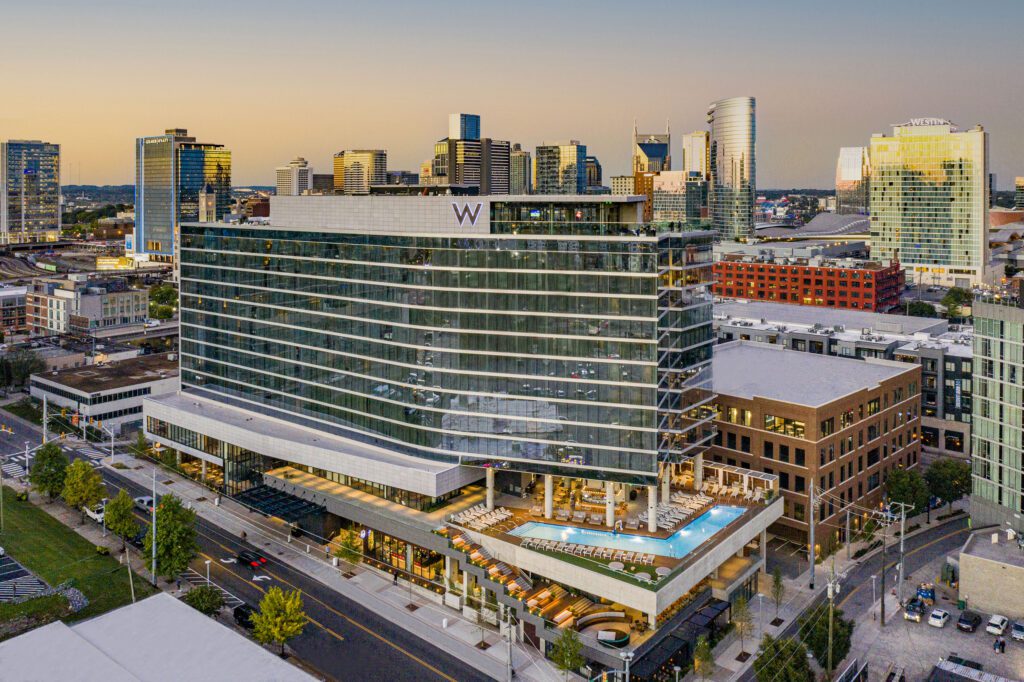
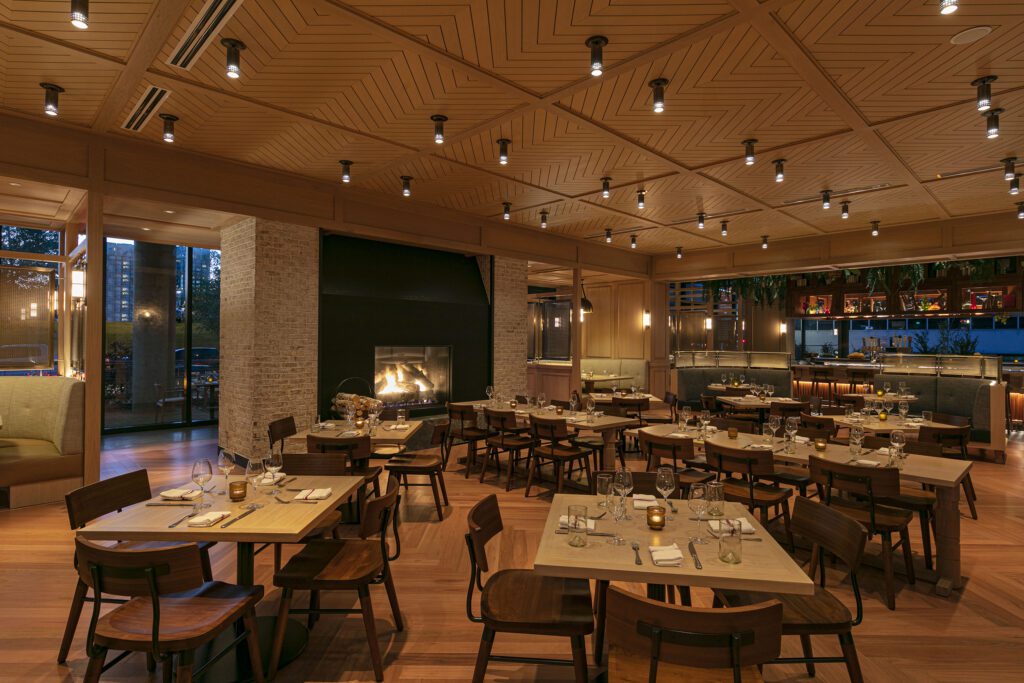
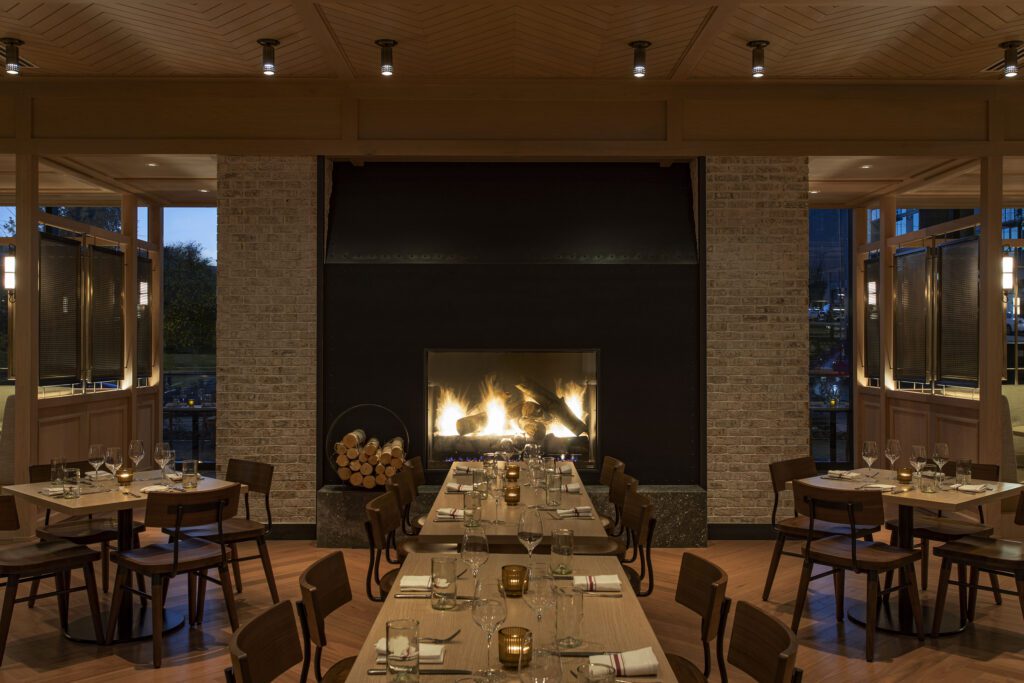
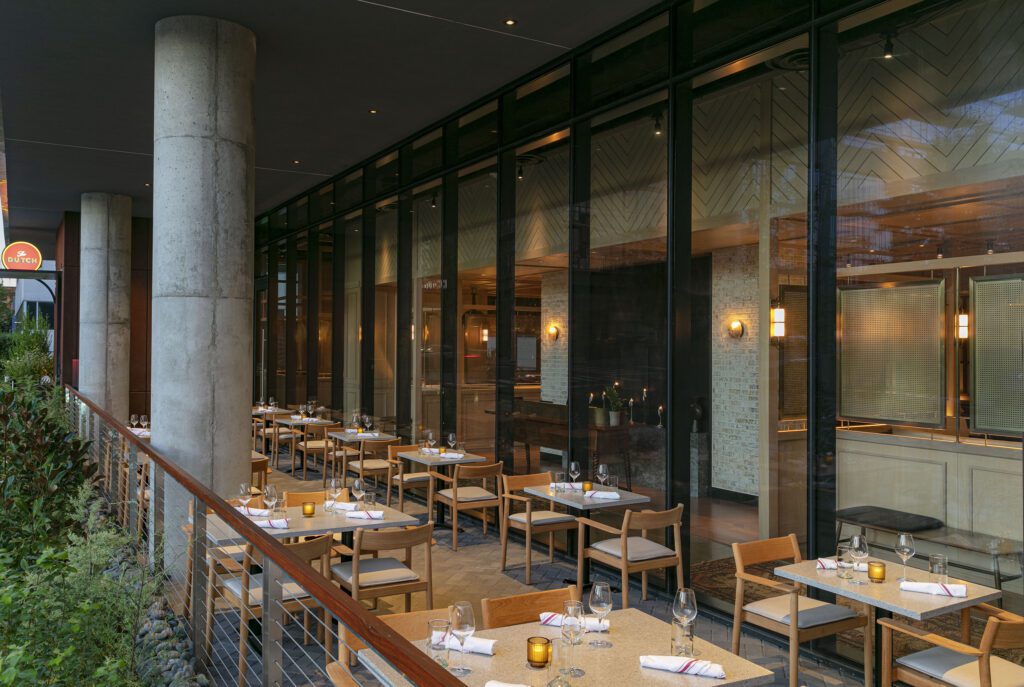
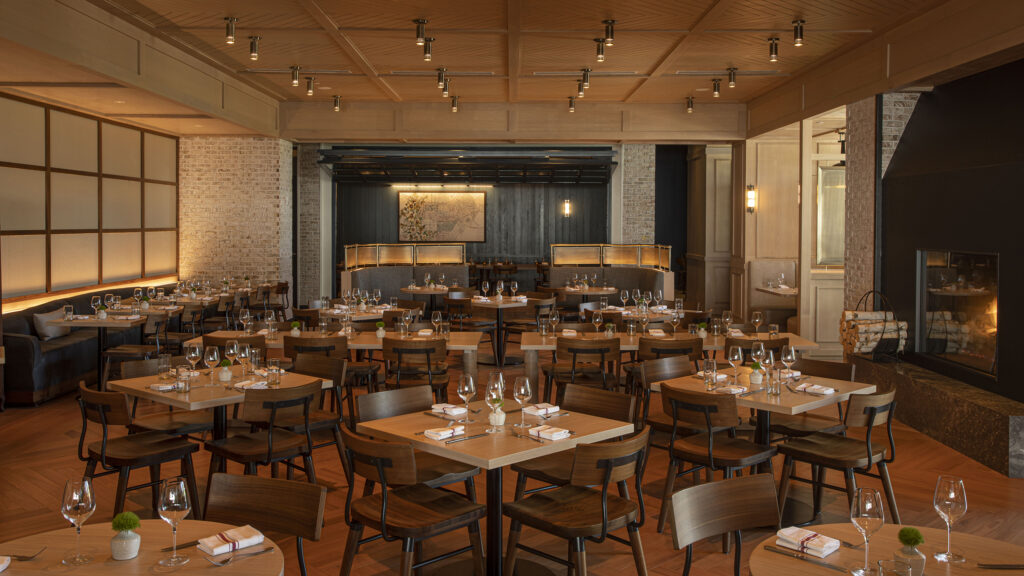
La marque W Hotel a toujours proposé des ambiances sophistiquées et haut de gamme dans chaque destination ou hôtel de style de vie envisagé, mais le W Nashville de 14 étages et 346 chambres pourrait bien avoir placé une nouvelle barre d'excellence. Situé dans le quartier de Gulch à Nashville, TN, le nouveau concept de la marque W Hotels de Marriott International vise à attirer à la fois les visiteurs et les locaux en offrant des expériences internes uniques qui incarnent l'histoire de Music City. L'une des principales caractéristiques de l'hôtel est le restaurant The Dutch, un restaurant américain moderne de 150 places créé par Andrew Carmellini, lauréat du James Beard Award. Conçu par le Rockwell Group, basé à New York, le restaurant dispose d'un grand îlot de verdure, d'une imposante cheminée centrale, de nombreuses possibilités de s'asseoir et d'un plafond unique en bois chevron - segmenté dans un style planche et latte - soulignant l'approche moderne mais authentique adoptée aussi bien dans la cuisine qu'à l'extérieur.
DÉFI ET ACTION
The original design for the wood ceiling system consisted of individual acoustical wood planks, supplied loose, that would then be cut, edge banded, finished, and assembled into a complex herringbone pattern in-field. While achievable, in-field fabrication leaves significant room for error due to traditionally simplistic on-site equipment, ever-changing field conditions, and larger tolerances during assembly. Additionally, the herringbone pattern provided for an added level of difficulty due to the overlapping layout of individual wood ceiling planks. Believing there to be a great benefit to both the installer and end-user in opting for a fully fabricated system, Rulon International, in partnership with the installing contractor, presented an option for fully-assembled panels reconfigured into a chevron pattern and supplied in an A/B paired module to maintain the overall aesthetic of the design. This approach allowed each module A and module B panel, constructed from individual wood planks attached to a routed wood backer panel, to be cut to overall size in-field and directly attached to the deck above, drastically reducing the in-field labor required for fabrication and assembly. The routed wood backer panels have the additional benefit of allowing sound to pass through the white-felt reveals and be trapped in the plenum above, attenuating the overall sound profile of the often lively dining room. Additionally, the change from a herringbone pattern to a chevron pattern limited the complexity of the assembly process, but maintained the overall design aesthetic. The simplified design of the ceiling panels resulted in a beautiful, sound-attenuating wood ceiling system that will continue to be a centerpiece of The Dutch restaurant for the foreseeable future.