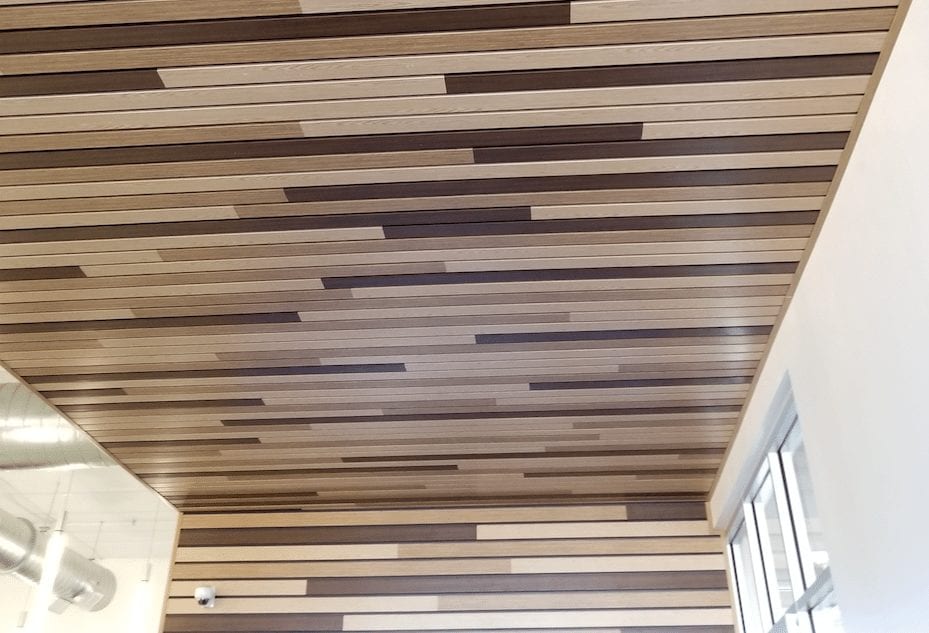
Why installers matter to design success
Hiring skilled wood ceiling installers is critical to ensuring that a project’s design vision translates into reality. While architects and designers define the concept, installers execute the details that determine durability, alignment, and performance. A ceiling may look precise on paper, but its success depends on installation quality, coordination, and adherence to tested assemblies.
Professional installers bring specialized knowledge of wood ceiling systems, from modular linear slats to custom-curved panels. Their experience ensures that products are handled correctly, integrated with other trades, and fitted to meet both aesthetic and performance standards. For project owners, choosing the right installers means confidence that schedules will be met and that the finished ceiling will function as intended.
Experienced wood ceiling installers also act as problem-solvers on site. They anticipate conflicts with lighting, HVAC, or sprinkler systems and address them before they disrupt progress. Their ability to read drawings, communicate with multiple trades, and execute to fine tolerances protects both design intent and project delivery.
The wood ceiling installation process: what to expect
Every project follows a defined wood ceiling installation process that balances preparation, precision, and performance. Understanding these steps helps design teams and owners anticipate what installers will deliver on site.
- Pre-installation planning: Installers review shop drawings, confirm dimensions, and verify conditions to ensure ceilings align with structural and mechanical requirements. Coordination with architects, contractors, and MEP trades at this stage reduces surprises during construction.
- Delivery and staging: Systems arrive prefabricated or panelized to minimize waste and accelerate installation. Options such asSelect N’ Ship provide quick-turn availability for time-sensitive scopes. Installers stage materials in a way that supports efficiency and protects finishes.
- Installation and integration: Installers follow engineered attachment methods, such as suspension systems or direct-attach assemblies, to secure panels and modules. Care is taken to integrate lighting, sprinklers, and air distribution seamlessly.
- Finishing and inspection: Mockups, finish checks, and alignment inspections confirm quality. Any adjustments are made before handoff, ensuring the ceiling performs both acoustically and aesthetically.
Beyond these general phases, every site has unique demands. In schools, installers often work around active campuses with limited access hours. In healthcare, work must minimize dust and disruption to protect patients. In offices, installation may be phased floor by floor to maintain occupancy. Skilled installers adapt the process to each project’s constraints without compromising craftsmanship.
Coordination with project teams
Wood ceilings do not exist in isolation—they integrate with lighting, HVAC, sprinklers, and other trades. Skilled installers understand how to sequence their work within larger construction schedules. Early communication ensures ceilings are placed without conflicts and that all systems remain accessible for maintenance.
Installers also collaborate closely with designers to confirm that performance expectations are met. For example, acoustic ceilings must be paired with absorptive cores or backers, and installers verify these elements during the build. By aligning installation with design requirements, they preserve both functionality and visual integrity.
Coordination extends beyond technical issues. Many ceiling projects are fast-tracked, with compressed schedules and shifting priorities. Installers who communicate clearly and document progress reduce uncertainty for project managers and owners. They provide updates on lead times, staging, and inspections, allowing other trades to stay on schedule. The most successful wood ceiling projects are those where installers act as partners, not just subcontractors.
Timelines and efficiency
One of the most pressing concerns in ceiling installation is time. Skilled installers provide accurate schedules, factoring in site conditions, sequencing, and product delivery. Prefabricated systems such asEndure Direct Attach streamline installation, reducing field adjustments and minimizing disruption.
Efficiency is not just about speed. Quality installers maintain consistency, ensuring reveals, spacing, and alignment match design intent. For owners, this reduces punch lists and rework, keeping projects on budget and on track.
Timelines also benefit from modular strategies. Systems likeEndure Linear arrive ready to install, cutting down on custom fabrication on site. For large corporate interiors or healthcare expansions, this predictability ensures occupancy dates are met. Installers who are trained in modular systems are able to deliver both performance and precision in shorter windows of time.
Quality assurance and documentation
Wood ceiling installers are responsible for more than physical labor—they also deliver the documentation that confirms compliance and safety. Submittal packages typically include:
- Shop drawings and attachment details
- Load data and structural requirements
- Fire performance information
- Mockup protocols and finish samples
This documentation reduces risk during installation by verifying that assemblies meet performance standards and code requirements before work begins. Thorough documentation also gives architects and contractors confidence that the installation will proceed smoothly. Installers who provide complete submittals support faster approvals and help avoid costly delays.
Quality assurance also extends to testing. Installers confirm acoustic targets by checking assemblies against specified NRC values. They verify fire ratings, coordinate seismic requirements where necessary, and ensure integration with life-safety systems. For building owners, this diligence guarantees that wood ceilings continue to perform as designed long after the project is complete.
Protecting material performance
Wood ceilings require careful handling to maintain their finish and longevity. Professional installers follow best practices for storage, acclimation, and installation in controlled conditions. Panels are acclimated to site temperature and humidity, and finishes are protected throughout staging and installation.
Beyond initial installation, installers provide maintenance recommendations so owners understand how to clean, service, and sustain ceiling performance over time. This step ensures that wood ceilings remain as functional and beautiful years after turnover as they did on opening day.
Protection also means anticipating real-world conditions. In transportation hubs or high-traffic spaces, installers may recommend durable systems such asbaffles or engineered finishes that resist wear. In outdoor or semi-exposed areas, products likeEndure Linear support consistent appearance and durability. Skilled installers help owners select and preserve systems that match use conditions.
Choosing the right wood ceiling installers
Not all installation teams bring the same expertise. The best installers combine technical skill with communication and coordination. Look for teams with proven experience handling wood systems such aslinear slats,grilles,curved panels, andflat veneer panels. Their familiarity with attachment methods and finish requirements ensures precision from the start.
Owners and designers can also benefit from reviewing references or exploring theproject gallery to see examples of completed ceilings. Experienced installers leave behind a track record of successful projects that speak to their reliability and craftsmanship.
Selecting the right installers also protects investment. Wood ceilings are often central design elements, and poor installation can undermine both performance and aesthetics. A team with experience, references, and strong communication ensures ceilings will deliver on their design promise for decades.
Confidence in execution
Hiring skilled wood ceiling installers is as critical as specifying the right system. They translate design drawings into built environments, ensuring that every ceiling meets its acoustic, aesthetic, and sustainable goals. From planning and documentation to installation and maintenance, installers are the link between design vision and lasting performance.
Explore theproducts available for wood ceiling systems orcontact the team to connect with specialists who can support installation strategies for your next project.