Why the choice matters
When specifying wall and ceiling systems, the decision between wood veneer paneling and solid wood is more than a matter of preference. It affects sustainability, performance, cost, and long-term maintenance. For architects and designers, this choice directly shapes how a space looks and functions, while for contractors and owners, it determines project efficiency and durability.
The popularity of veneer and solid wood systems reflects their shared qualities—warmth, natural beauty, and biophilic appeal. Yet they differ in construction, sourcing, and lifecycle performance. Knowing when to use each option helps project teams align design intent with budget, environmental goals, and technical requirements.
In many projects, this decision also reflects priorities at the organizational level. Educational institutions may emphasize sustainable sourcing, while healthcare environments demand low-maintenance finishes that can perform over time. Cultural venues may prioritize the authenticity of solid wood to underscore tradition and identity. By understanding the distinctions, stakeholders can make decisions that are consistent with broader project values.
Understanding wood veneer paneling
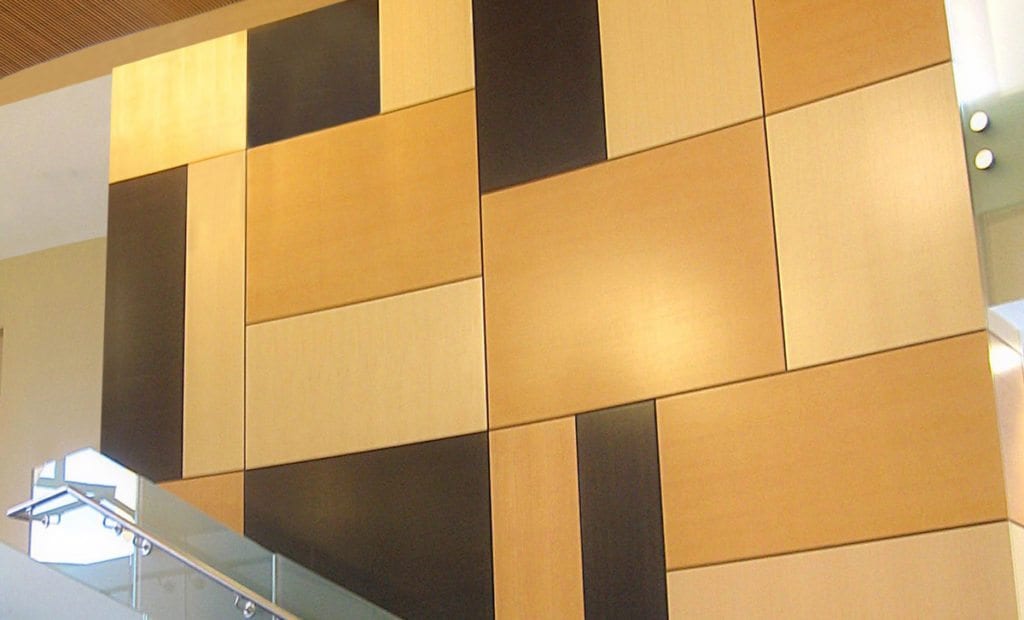
Wood veneer paneling consists of thin slices of natural wood adhered to a stable core material. This method maximizes the use of valuable timber, allowing a single log to cover far more surface area than solid wood. Veneer captures the authentic look and feel of wood grain while offering predictable performance and efficient use of resources.
The advantages of veneer include design flexibility, lightweight installation, and access to a wide variety of wood species without the cost or sourcing challenges of solid lumber. Products like flat veneer panels deliver broad, uninterrupted planes with concealed access options for building systems. This makes veneer an excellent choice for large-scale projects where consistency, sustainability, and serviceability matter.
Another strength of veneer is its ability to support creative design continuity. Because veneer can be bookmatched or sequenced, designers can create patterns that flow across walls and ceilings in a way that feels natural and cohesive. This level of control allows architects to combine efficiency with visual impact, making veneer systems a strong fit for projects that value both scale and sophistication.
The qualities of solid wood
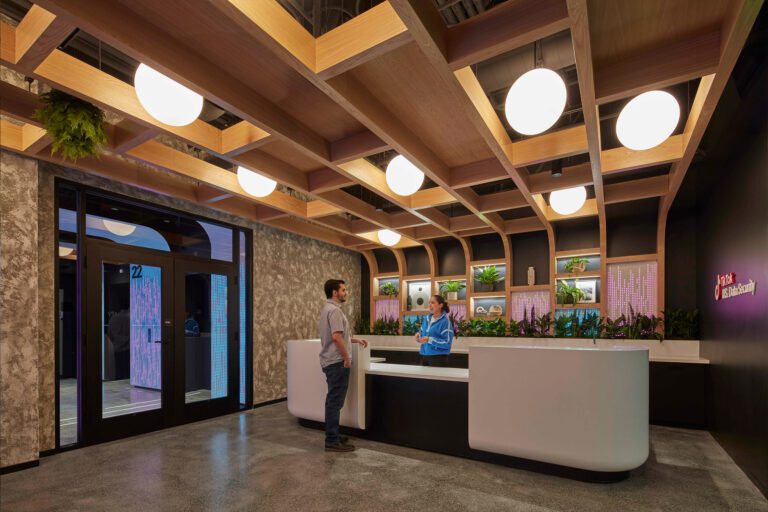
Solid wood panels are milled from lumber and valued for their durability and tactile authenticity. They carry a natural richness that ages gracefully and can be refinished over time. Solid wood is often chosen for spaces where permanence and tradition are priorities, such as civic buildings, auditoriums, and high-end cultural venues.
While solid wood can achieve unmatched material presence, it also requires careful attention to environmental conditions. Humidity and temperature shifts can lead to movement, so proper acclimation and installation practices are essential. Solid systems may also be heavier, requiring additional structural support and installation time compared to veneer alternatives.
For projects where identity is central, solid wood can provide unmatched resonance. Its physical weight, tactile grain, and capacity to patinate create an enduring connection between people and place. When budget and structure allow, solid wood becomes a symbolic choice as much as a material one, expressing stability, tradition, and authenticity.
Sustainability in Wood Veneer vs Solid Wood
One of the most important considerations today is sustainability. The comparison of wood veneer vs solid wood sustainability highlights distinct advantages for each approach.
Veneer supports resource efficiency by extending the use of each log across a much larger surface area, making it an inherently sustainable choice. This efficient yield helps reduce waste while still showcasing authentic wood grain. Combined with responsible sourcing, veneer aligns well with certifications like LEED and WELL.
Solid wood, while less efficient in yield, can be sourced responsibly and provides exceptional durability. Its longevity can offset its higher material use, particularly when panels are maintained and refinished instead of replaced. For both veneer and solid systems, documented sustainable practices ensure transparency in sourcing and manufacturing.
Sustainability also includes life-cycle considerations. Veneer systems often reduce weight, simplifying installation and transportation, which further reduces carbon footprint. Solid wood, by contrast, may require greater resources upfront but offers resilience that can reduce replacement cycles. Both paths demonstrate that sustainability is not a one-size-fits-all equation but a balance of efficiency, longevity, and responsible sourcing.
Performance and design considerations
Acoustics
Both veneer and solid wood can be engineered to meet acoustic goals. Systems such as Aluratone panels incorporate perforations or grooves with absorptive backers, balancing visual continuity with targeted sound control. In lecture halls, offices, or healthcare facilities, acoustic performance may be a deciding factor regardless of whether veneer or solid is specified.
Acoustic strategy often determines the choice of system. Veneer can be manufactured with precise perforation patterns that align with NRC targets while maintaining visual consistency. Solid wood may be selected for its tactile qualities, then paired with complementary acoustic treatments elsewhere in the interior. In either case, ceilings and walls become active participants in the sound environment.
Cost and efficiency
Veneer generally offers cost advantages by stretching material further and reducing installation labor through lighter, panelized systems. Solid wood, though more expensive, can be an investment in craftsmanship and long-term durability. Project budgets often dictate where veneer brings efficiency and where solid wood is justified.
Cost efficiency also comes from predictability. Veneer panels are consistent in dimension and performance, supporting modular planning across large interiors. Solid wood, while more variable, can achieve premium expression. Project teams must weigh whether cost savings and predictability outweigh the prestige and authenticity of solid material.
Aesthetic continuity
Veneer provides unmatched consistency across large areas, making it suitable for campuses, offices, and cultural venues where design unity is critical. Solid wood, by contrast, emphasizes uniqueness and natural variation. Designers often choose solid wood where distinct character is desired and veneer when scale demands uniformity.
This distinction is particularly important in multi-building or phased projects. Veneer allows for repeatability across different sites or phases without visible differences in appearance. Solid wood, while expressive, is more difficult to replicate on a large scale. The decision therefore depends not only on aesthetics but also on the scope and long-term vision of the project.
Serviceability
Veneer systems are designed for access and integration. Panels can conceal doors, lighting, or mechanical systems while maintaining a continuous field. Solid wood systems offer longevity but may be more difficult to integrate with building infrastructure. Installers with experience in both systems ensure proper detailing for long-term serviceability.
Serviceability also extends to maintenance. Veneer systems can be designed with replaceable panels, reducing long-term costs when damage occurs. Solid wood can be refinished, maintaining its integrity over decades. Each system has a different approach to service, and project teams must consider which aligns best with operational requirements.
Where each system excels
- Wood veneer paneling: Best suited for large-scale projects requiring consistency, efficiency, and sustainable resource use. Common in corporate workplaces, education facilities, and healthcare environments.
- Solid wood: Ideal for projects where tradition, permanence, or expressive materiality are priorities. Common in cultural venues, civic institutions, and high-end interiors.
The decision is not always either-or. Many projects combine veneer and solid elements, using veneer for broad coverage and solid wood for accents, edges, or details that benefit from its strength and tactile richness.
Another advantage of blending systems is storytelling. For example, a cultural project may use veneer throughout circulation spaces for efficiency, then highlight solid wood in key ceremonial areas for symbolic impact. This layered approach allows design teams to balance sustainability, budget, and identity within one cohesive interior.
The role of installation and procurement
Regardless of material choice, success depends on professional installation and careful procurement. Veneer and solid wood both require acclimation to site conditions and protection during installation. Teams experienced in wood systems ensure that attachment methods, alignment, and finishes meet specifications.
Procurement strategies also influence outcomes. Quick-turn needs can be supported through Select N’ Ship, while larger, phased projects may standardize modules to simplify installation and maintenance across multiple spaces. Both veneer and solid systems benefit from early coordination with installers and manufacturers.
Another key consideration is long-term operations. Projects with limited maintenance budgets may benefit from veneer systems that simplify replacement. Institutions with long lifespans may prefer solid wood for its refinishing potential. Installers and suppliers guide these decisions by sharing documentation and maintenance protocols that extend the life of both systems.
Making the decision
Choosing between wood veneer paneling and solid wood comes down to project goals. Veneer offers efficiency, sustainability, and consistency. Solid wood provides authenticity, strength, and enduring presence. The right choice depends on whether the priority is scale, cost, and resource efficiency or permanence, uniqueness, and tradition.
The decision should also consider the audience and use of the space. Academic buildings, hospitals, and workplaces often benefit from veneer’s efficiency and integration. Civic buildings, cultural venues, and high-end interiors may favor solid wood for its symbolic resonance. Many projects combine both systems to achieve the best of each.
Explore the product portfolio to see the range of systems available, from veneer panels to solid wood solutions like beams, cubes, and baffles. For inspiration across sectors, visit the project gallery. To discuss which system is right for your project, contact the team for technical guidance and support.