When architects and interior designers first begin exploring ceiling materials, the conversation typically starts with acoustics, fire ratings, and budget. But for the projects that leave a lasting impression, those practical considerations are just the beginning. A well-designed decorative wood ceiling does not simply cover the space above occupants’ heads. It shapes how people move through a room, how they feel within it, and how long they remember it.
Standard panel systems have their place. They are reliable, repeatable, and cost-effective. But there is a growing class of commercial projects where “standard” is not good enough. Museums, performing arts centers, corporate headquarters, hospitality venues, and healthcare campuses increasingly demand ceiling solutions that communicate identity, support wellness, and demonstrate design ambition. That is exactly where decorative wood ceiling design pushes past the ordinary.
What Sets a Decorative Wood Ceiling Apart from Standard Systems
A standard suspended ceiling system is designed primarily around efficiency: consistent tile dimensions, predictable installation, and straightforward maintenance access. A decorative wood ceiling starts from a different premise entirely. The ceiling becomes an architectural element, one with sculptural presence, material warmth, and the ability to reinforce a project’s narrative from the moment someone walks through the door.
The distinction shows up in several ways. First, geometry. Decorative wood ceilings frequently depart from the flat plane, introducing curves, undulations, canopies, and three-dimensional forms that draw the eye upward and create spatial drama. Second, finish. Wood is an extraordinarily versatile material, accepting custom stains, species selections, and even printed graphics that no other ceiling material can replicate. Third, integration. A thoughtfully designed decorative wood ceiling works in concert with lighting, acoustics, HVAC, and fire suppression systems rather than competing with them.
The result is a ceiling that earns its place in the design, rather than simply occupying it.
Decorative Wood Ceiling Options That Go Beyond the Flat Panel
The range of design possibilities within the decorative wood ceiling category is broader than many architects initially realize. Understanding the available systems is the first step toward matching the right solution to the project at hand.
Custom-Curved Panels
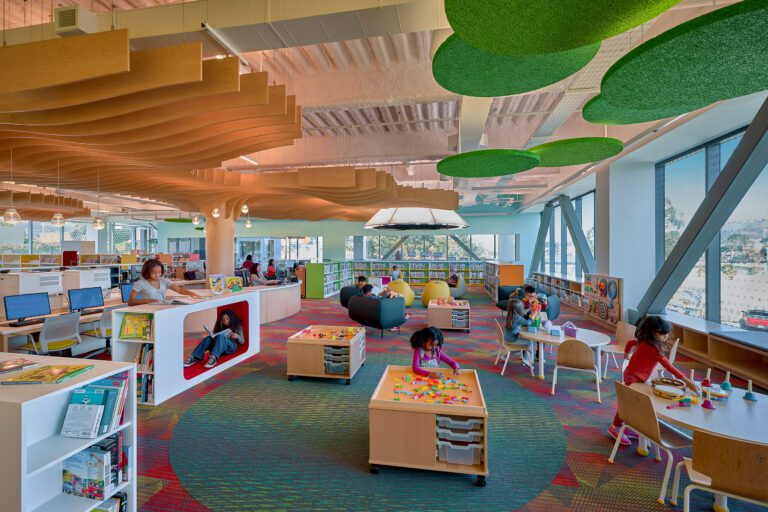
Curved wood panels represent one of the most impactful directions in decorative ceiling design. Rather than conforming to straight runs and right angles, curved panels allow the ceiling plane to respond to the architecture below it, flowing around columns, following the geometry of an atrium, or creating wave-like rhythms across a large gathering space.
Rulon’s Curvalon system delivers custom-shaped wood veneer panels manufactured from a flexible core material. Concave, convex, and compound curves are all achievable, and custom panel sizes minimize waste while ensuring a consistent, uniform appearance from panel to panel. The system has been used to striking effect in casino interiors, cultural institutions, and high-profile corporate lobbies where the ceiling is expected to carry as much visual weight as any other design element.
For spaces that require not just aesthetic curves but acoustic performance within a curved form, Rulon’s Curvatone takes the concept further. These custom-curved acoustic panels are machined to maximize sound control while maintaining the visual warmth of wood. Projects like the George Washington University School of Health and Human Services demonstrate how Curvatone panels can wrap interior columns and walls in a flowing wood surface that simultaneously addresses reverberation and defines the character of the space.
Three-Dimensional Wood Cube Systems
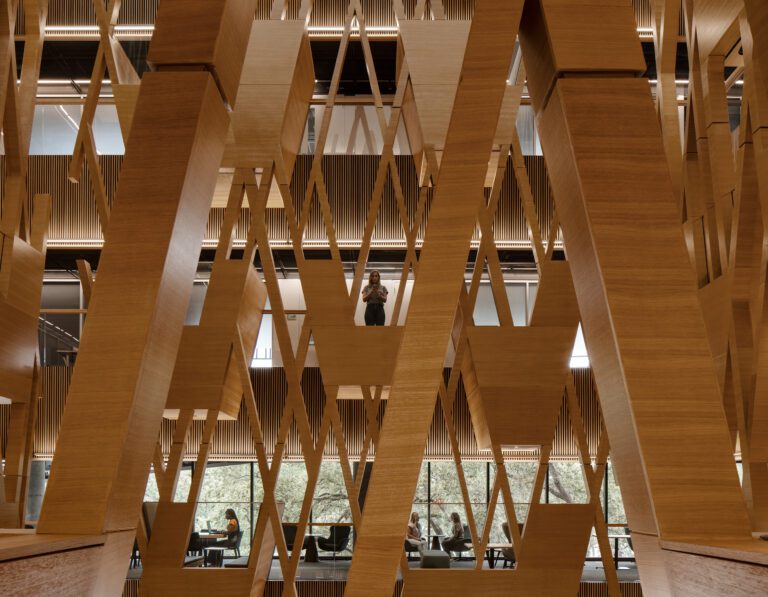
Not every decorative wood ceiling statement requires a curve. Some of the most architecturally compelling ceilings are built on repetition and geometry. Wood cube systems introduce a grid of three-dimensional forms that add depth, shadow, and visual texture to the ceiling plane in a way that flat panels simply cannot achieve.
Rulon’s Cubes product brings the warmth and beauty of wood to large areas through a creative system that pairs strong visual impact with practical functionality. The Jet.com headquarters in Hoboken, New Jersey, demonstrated how a wood cube ceiling system can anchor an open-concept commercial interior, adding warmth and texture while reinforcing the brand’s identity. Cubes are available with lay-in or tegular installation options and can meet FSC, Indoor Advantage Gold, and other sustainability certifications critical to LEED-pursuing projects.
Custom Graphics and Branded Ceiling Designs
Perhaps the most unexpected capability within the decorative wood ceiling category is the ability to incorporate custom-printed graphics directly into the ceiling surface. This is not a workaround or a compromise. It is a genuine design tool that opens up entirely new possibilities for branded environments, cultural institutions, and hospitality spaces that want their ceilings to tell a story.
Rulon’s Custom Printing capability allows architects and designers to embed imagery, patterns, and brand graphics into wood ceiling panels. A hotel might carry a regional motif across its lobby ceiling. A children’s hospital might introduce a nature-inspired canopy that supports healing and reduces patient anxiety. A corporate headquarters might use the ceiling plane to communicate its visual identity at a scale no wall treatment could match. The process uses state-of-the-art finishing equipment and can be applied to a wide range of Rulon’s product lines.
The Biophilic Case for Decorative Wood Ceilings in Commercial Design
The design case for a decorative wood ceiling is compelling on its own. But the human performance and wellness case makes it even stronger.
Wood is one of the most powerful materials in biophilic design, the practice of incorporating natural elements into built environments to support human health and wellbeing. A growing body of research confirms that exposure to wood surfaces in interior spaces reduces stress, lowers heart rate, and improves occupant focus and mood. In commercial settings, those effects translate directly to measurable outcomes: better productivity in offices, faster healing in healthcare environments, and stronger guest satisfaction in hospitality settings.
As Architectural Record reported in a recent feature on biophilic design at Princeton’s Frist Health Center, exposed timber throughout a building’s public spaces introduces a warmth that actively counters the clinical feel of institutional interiors. The architects behind that project deliberately chose wood to deinstitutionalize the space, and the results speak for themselves in how occupants have responded to the building.
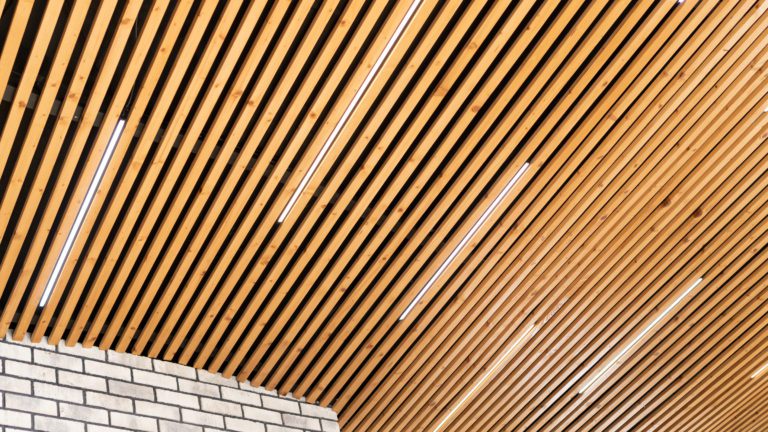
This dynamic is not limited to healthcare. Interior Design Magazine has documented project after project in which innovative wood ceiling treatments, from undulating slatted systems to geometric micro-perforated oak panels, serve a dual purpose: captivating the eye and actively improving the acoustic comfort of the space below.
When the ceiling is both beautiful and functional, it earns its investment many times over.
How to Specify a Decorative Wood Ceiling for Your Next Project
Specifying a decorative wood ceiling successfully requires thinking through several dimensions of the project simultaneously.
Start with the design intent. Is the ceiling meant to be a signature moment, or a refined background element? A curved sculptural form reads very differently from a refined linear run, even when both use the same wood species and finish. Defining the design intent early prevents expensive course corrections later.
Align geometry with structural reality. Custom curves, large-format panels, and three-dimensional systems all have structural and suspension implications. Rulon works directly with architects and project teams to engineer ceiling assemblies that achieve the desired geometry while meeting seismic, fire, and MEP coordination requirements. CNC manufacturing capabilities allow for factory-cut penetrations for lighting, speakers, and sprinklers, so the finished ceiling looks intentional rather than improvised.
Choose wood species and finish deliberately. White oak, maple, cherry, bamboo veneer, and other species each carry distinct grain patterns, tonal ranges, and finish behaviors. The right species choice depends on the lighting environment, the surrounding material palette, and the long-term maintenance expectations for the space. Low-VOC stains and sealers protect the surface while supporting indoor air quality goals critical to WELL and LEED certification.
Plan for access and longevity. Even the most sculptural decorative wood ceiling needs to allow for above-ceiling access in most commercial applications. Rulon’s suspension systems, including torsion springs and C-hangers, are designed to allow individual panel removal without disturbing the surrounding field, keeping the ceiling serviceable across the life of the building.
Engage early. The most successful decorative wood ceiling projects are those where the ceiling manufacturer is brought into the conversation during schematic design, not after construction documents are complete. Early engagement allows custom sizes, finishes, and fabrication sequences to be optimized for both design quality and project schedule.
Bringing a Decorative Wood Ceiling to Life
A decorative wood ceiling is not a finishing detail. It is an architectural decision, one that influences how a space sounds, how it feels, and how it represents the people and organizations within it. From custom-curved sculptural panels to branded graphic systems to three-dimensional wood cube installations, the possibilities extend far beyond what most architects and designers have seen specified on a standard project.
Rulon International has been engineering custom wood ceiling and wall systems since 1976. The team works directly with architects, interior designers, and specifiers to develop ceiling solutions that are as technically sound as they are visually compelling. If your next project calls for a ceiling that does more than cover the space above, it is worth exploring what a truly custom decorative wood ceiling can achieve.