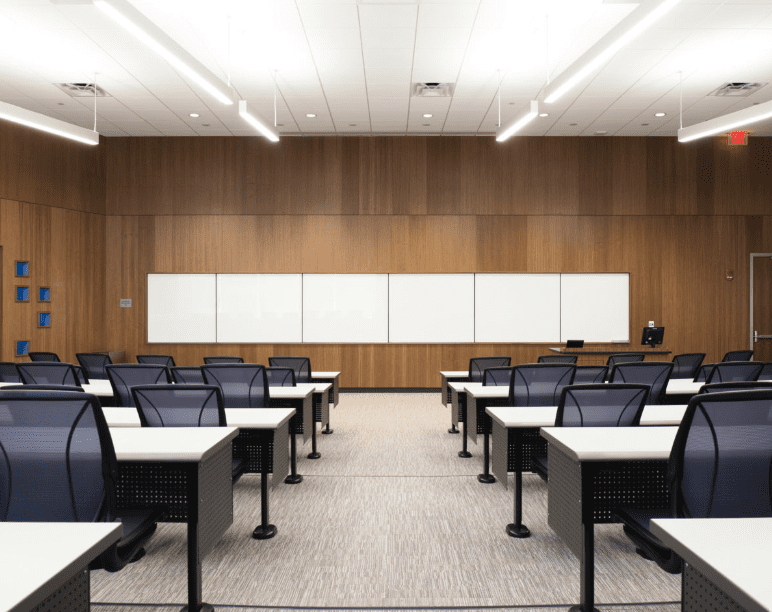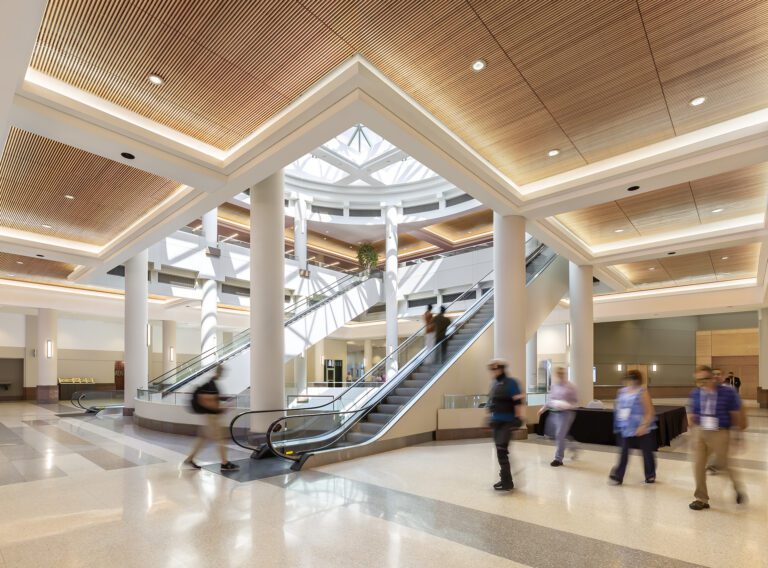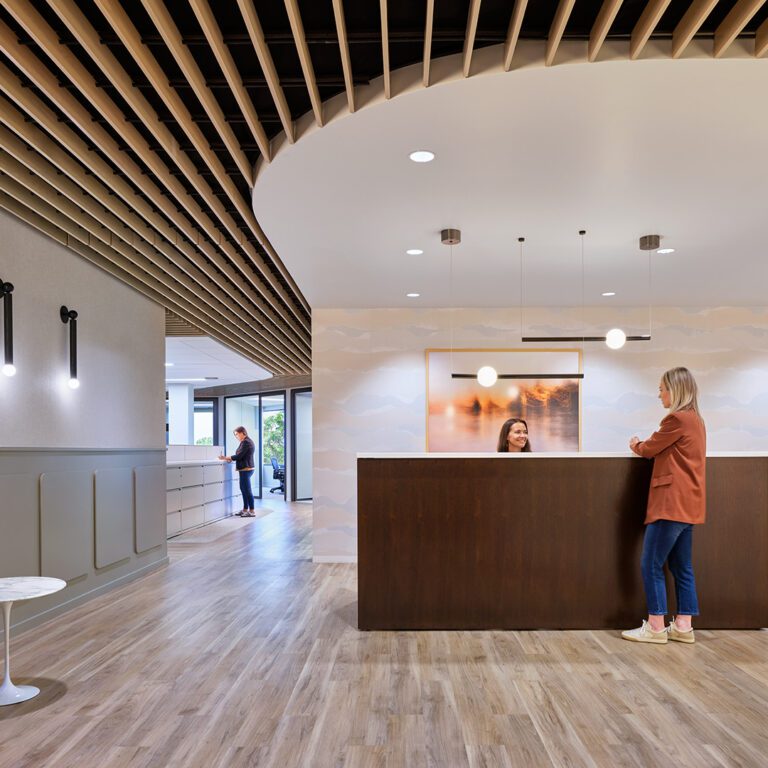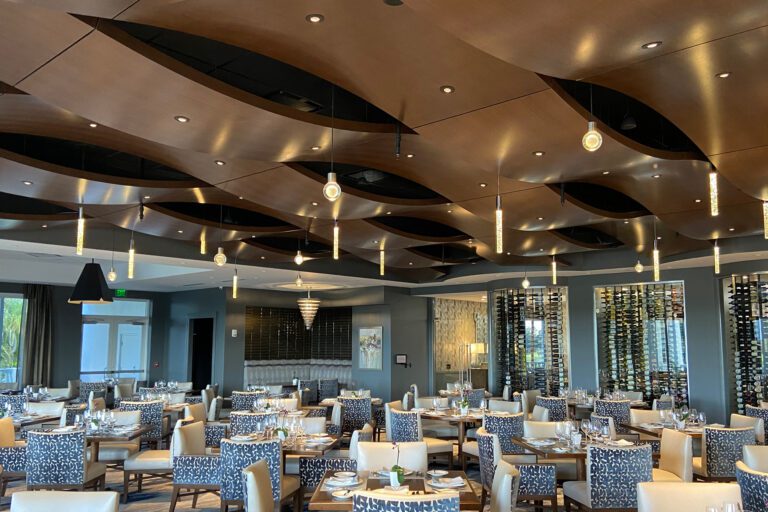
Students spend thousands of hours in classrooms throughout their educational careers. The acoustic quality of these spaces directly affects whether students can hear their teachers clearly, understand complex concepts, and perform to their potential. Yet many educational facilities exhibit acoustic conditions that impede learning, with excessive reverberation and background noise that interfere with education every day. Poor classroom acoustics measurably affects student performance, increases teacher vocal strain, and disproportionately harms students with hearing challenges or those learning in non-native languages.
Classroom acoustics has evolved from an overlooked specification detail to a recognized educational design priority. ANSI/ASA S12.60 provides clear performance standards that, when properly implemented, create learning environments where speech intelligibility supports education. Understanding classroom acoustics requirements helps architects specify wood panel systems meeting educational standards while creating environments supporting learning.
Understanding ANSI S12.60 Requirements
The American National Standard for classroom acoustics establishes maximum acceptable levels for both background noise and reverberation time. For core learning spaces under 20,000 cubic feet, the standard specifies:
Background noise: Maximum 35 dBA for the one-hour average A-weighted sound level. This stringent target addresses cumulative noise exposure affecting learning throughout the school day. This limit requires careful control of mechanical systems, exterior noise intrusion, and sound transmission from adjacent spaces.
Reverberation time: Maximum 0.6 seconds for rooms under 10,000 cubic feet, 0.7 seconds for rooms between 10,000 and 20,000 cubic feet. These targets apply to the unoccupied, furnished classroom measured at mid-frequencies (500-2,000 Hz).
The reverberation time requirement focuses on acoustic treatment. Hard surfaces (drywall, concrete, tile flooring) provide minimal absorption. Without intervention, typical classrooms exhibit RT60 values of 1.0-1.5 seconds, well above the standard’s limits. Meeting the 0.6-0.7 second target requires adding substantial absorption through ceiling treatment.
LEED v4 BD+C: Schools makes ANSI S12.60 compliance a prerequisite, recognizing the fundamental importance of acoustic quality to educational environments.
How Wood Acoustic Panels Meet Educational Standards
Achieving ANSI S12.60 compliance requires absorptive materials with high NRC ratings covering significant ceiling area. Wood acoustic panel systems rated NRC 0.75-0.90 provide the performance necessary to meet reverberation time targets in most classroom configurations.
For a typical classroom (30 feet × 30 feet × 10 feet ceiling height = 9,000 cubic feet), achieving RT60 of 0.6 seconds requires approximately 800-1,000 sabins of total absorption. The existing room (hard floors, drywall walls, windows) might contribute 200-300 sabins. The ceiling treatment must provide the remaining 600-700 sabins.
With wood panels rated NRC 0.80 covering 800 square feet of ceiling (approximately 90% coverage), the ceiling contributes 640 sabins (800 sq ft × 0.80 NRC). This calculation assumes typical classroom surface materials (gypsum board walls, vinyl tile or carpet flooring, windows comprising 10-15% of wall area). Classrooms with extensive hard surfaces require higher NRC-rated products or increased coverage area.
Most core learning spaces require 70-90% ceiling coverage with high-performance acoustic panels (NRC 0.75-0.90) to achieve ANSI S12.60 reverberation targets. Understanding how NRC ratings translate to absorption performance helps architects specify appropriate products for educational environments.
Unlike acoustic tile that reinforces institutional character, wood ceiling systems create environments that feel warmer and more residential. For students spending six hours daily in these spaces, the aesthetic difference affects mood, stress levels, and engagement.
Rulon’s Aluratone panels achieve NRC values up to 0.85, providing the speech-frequency absorption that educational spaces require. Wood ceiling systems like Rulon’s Linear and Grille products create environments that feel grounded and inviting rather than institutional.
Successful classroom acoustics design balances ANSI S12.60 compliance with material aesthetics and lifecycle durability essential to educational facilities.
Special Considerations for Different Educational Spaces
Classroom acoustics requirements vary significantly by space type, requiring tailored approaches for lecture halls, music facilities, and collaborative learning environments.
Lecture Halls and Auditoria
Large instructional spaces present unique acoustic challenges. Lecture halls seating 100+ students require longer sound paths from the instructor to the rear seats, making acoustic clarity even more critical than in standard classrooms.
These spaces require acoustic flexibility supporting both instructional and performance functions that provide absorption at the rear of the room while preserving some reflective surfaces near the front to project the instructor’s voice. Curved wood ceiling systems can be engineered to provide both absorption and controlled reflection.
The Richard Gilder Center at the American Museum of Natural History demonstrates how wood acoustic systems perform in cultural learning environments requiring precise sound control across complex geometries. See case studies for educational applications. Rulon’s colleges and universities projects demonstrate acoustic solutions across diverse educational typologies.
Music Rooms and Band Halls
Music education spaces require fundamentally different acoustic approaches than speech-focused classrooms. RT60 targets for music rooms typically range 0.8-1.2 seconds (longer than speech classrooms) to preserve musical tone quality. Variable acoustic treatments using movable panels or acoustic curtains allow the same space to serve multiple functions.
Sound isolation becomes critical for music spaces. ANSI S12.60 recommends minimum STC 60 for music room walls, recognizing that musical sound transmission disrupts adjacent classrooms more severely than typical noise sources.
Collaborative Learning Spaces
Modern educational facilities increasingly feature flexible collaboration spaces requiring acoustic design that supports both conversation within groups and privacy between groups. This requires both absorption and spatial division.
While absorptive ceiling treatment remains necessary, vertical elements like suspended baffles or partial-height screens provide the acoustic separation needed between work zones. Specify ceiling absorption targeting RT60 0.7-0.9 seconds in flexible learning spaces—slightly longer than traditional classrooms to support group discussion while preventing excessive buildup across multiple simultaneous conversations.
Durability and Maintenance in Educational Settings
Educational facilities experience harder use than most commercial buildings. Wood acoustic panels with appropriate finish coatings resist the impacts, scratches, and wear that educational spaces encounter. The solid wood face doesn’t tear, stain, or deteriorate from rough handling.
Modular wood panel systems allow replacement of individual damaged panels without disturbing the entire ceiling. Long-term acoustic performance remains stable—backing materials don’t compress or deteriorate significantly over time, maintaining absorption coefficients throughout the building’s life.
Integration with Other Building Systems
Lighting Coordination
Wood acoustic ceiling systems accommodate lighting requirements through integrated fixtures factory-installed into panel assemblies, linear LED systems coordinating with panel layouts, and recessed downlights positioned at panel joints. Coordination must happen during design development—light fixture locations affect panel module sizes and layouts, influencing both acoustic coverage calculations and aesthetic appearance.
Mechanical Systems Coordination
Meeting the ANSI S12.60 background noise limit requires coordination between mechanical systems and architectural finishes. The ceiling system must accommodate ventilation while maintaining acoustic performance. Diffusers can be integrated into wood panel assemblies or positioned at panel joints.
At Benjamin Banneker High School, Perkins Eastman specified Rulon’s Linear Open and Grille systems throughout multi-level communal spaces to control sound while reinforcing openness central to the school’s collaborative learning model.
For guidance on wood species selection and finish options, architects benefit from understanding material characteristics and protective coatings.
Educational Facility Certification and Acoustic Performance
Educational facilities pursuing green building certification find acoustic performance contributes to multiple credit categories. LEED v4 BD+C: Schools makes ANSI S12.60 compliance a credit, recognizing acoustic quality as fundamental to educational environments.
For school districts and universities, certification delivers competitive advantages. LEED-certified educational facilities demonstrate commitment to student wellness and learning outcomes. The U.S. Green Building Council’s LEED v5 framework emphasizes occupant experience alongside environmental performance.
Wood acoustic panels with FSC certification and low-VOC finishes support Materials and Resources credits while meeting acoustic requirements. Rulon’s sustainability commitments detail certifications supporting educational facility goals.
The LEED Silver-certified University of South Florida Judy Genshaft Honors College demonstrates this approach: Rulon’s Aluratone panels were specified throughout the first floor for acoustic properties, while Grille wall treatments create a cohesive material language supporting both concentrated study and energetic collaboration.
Educational libraries require acoustic strategies balancing quiet study zones with collaborative areas—similar challenges to classroom environments but with different spatial organizations.
The Case for Investment
Educational facility budgets face constant pressure. Wood acoustic panels typically cost 2-4 times standard acoustic ceiling tile, requiring justification beyond simple code compliance.
Investments in classroom acoustics deliver measurable returns through improved student outcomes, reduced teacher vocal strain, and enhanced learning environments. Academic research links improved classroom acoustics to better performance. Educational facility research documents reduced teacher absenteeism and improved job satisfaction in acoustically treated spaces. Wood panels lasting 30+ years with minimal maintenance provide better lifecycle economics than cheaper alternatives requiring replacement after 15-20 years.
Poor acoustics disproportionately harm students with hearing loss, learning differences, or those learning in non-native languages. Providing adequate acoustic environments addresses educational equity in measurable ways.
Creating Learning Environments That Work
Classroom acoustics has moved from an overlooked detail to a recognized priority in educational facility design, with wood panel systems providing proven compliance pathways. ANSI S12.60 provides clear targets, and wood acoustic panel systems achieve those targets while creating environments supporting learning through both acoustic performance and aesthetic quality.
Success requires integrated design addressing acoustic treatment alongside mechanical systems, lighting, and architectural finishes. Acoustic design principles for educational facilities share similarities with workplace acoustic strategies, though reverberation targets differ based on room volume and occupancy patterns.
For comprehensive guidance on wood acoustic panel engineering, architects benefit from understanding how perforation patterns and backing systems achieve frequency-specific absorption.
Educational facility design requires acoustic strategies recognizing speech intelligibility as fundamental to learning outcomes. Students and teachers shouldn’t have to fight the building to communicate clearly. With proper planning and appropriate materials, you can create learning environments where acoustics support education rather than interfering with it.Review Rulon’s colleges and universities portfolio for educational installations, or explore Select-N-Ship for accelerated delivery. For educational facility acoustic guidance, contact Rulon at 904-584-1400.