Three material categories dominate suspended ceiling systems in commercial construction. Each delivers acoustic control, infrastructure concealment, and fire safety. But the similarities end there. Wood, metal, and tile create distinctly different experiences, carry different price points, and serve projects with different priorities.
The material you choose affects more than appearance. It influences acoustic performance, maintenance requirements, lifecycle costs, fire code compliance, and sustainability contributions. Comparing suspended ceiling systems by material reveals performance differences critical to specification decisions. Understanding these differences across Rulon’s ceiling products helps match system to situation rather than defaulting to whatever seems most familiar.
Performance Comparison: The Numbers That Matter
Specifications cite performance metrics. Here’s what those numbers mean in practice and how the three materials compare.
Acoustic Capabilities
Acoustic performance varies significantly across suspended ceiling systems.
Sound Absorption (NRC). Mineral fiber tiles lead in raw absorption potential, with premium products reaching NRC 0.95. The porous material structure traps sound waves across a broad frequency range. Standard tiles typically deliver NRC 0.55-0.75, adequate for most commercial applications.
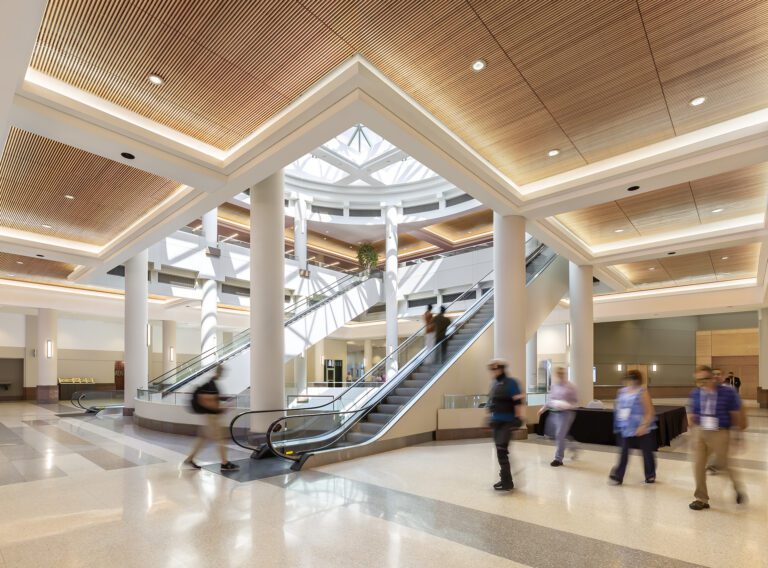
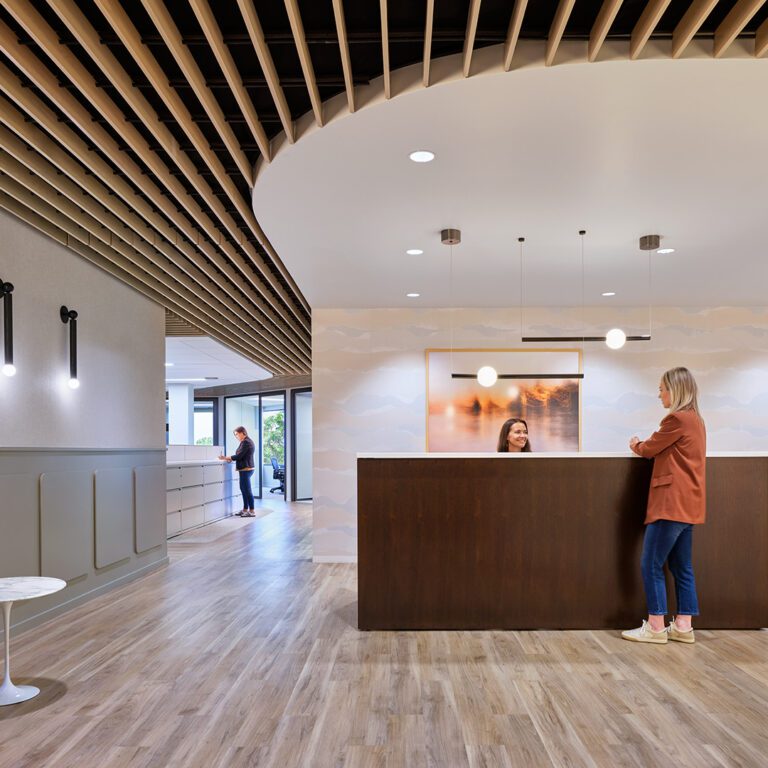
Wood ceiling systems like Rulon’s Linear achieve NRC 0.55-0.70 in linear configurations with backing material. Perforated wood panels like Aluratone push higher, reaching NRC 0.85 when properly engineered. The performance comes from the complete assembly (wood surface, perforations or spacing, backing material, and air gap), not the wood alone.
Metal systems depend entirely on perforations for absorption. Solid metal reflects sound. Micro-perforated metal with appropriate backing achieves NRC 0.60-0.80. The material’s rigidity prevents it from contributing to absorption the way fibrous materials do, so performance relies purely on air passage through holes to the backing.
Sound Blocking (CAC). This metric matters tremendously but receives less attention than absorption. CAC measures how well ceiling systems prevent sound from traveling through shared plenums to adjacent spaces.
Standard mineral fiber tiles score CAC 25-35 unless specifically engineered for blocking. Premium tiles reach CAC 40-42. The tiles themselves provide some blocking, and the grid system adds mass that helps.
Wood panel systems typically achieve CAC 35-40 depending on panel density and thickness. Solid wood provides better blocking than open or perforated configurations. Metal systems score similarly, with solid panels outperforming perforated ones.
The complete floor/ceiling assembly (including the ceiling material, any insulation above, and the structural deck) determines ultimate sound isolation between vertically stacked spaces. Ceiling material contributes but doesn’t dictate performance alone.
Real-World Application. An open-plan office needs both high NRC (reducing noise within the space) and high CAC (preventing conversations from traveling to neighboring areas through the plenum). This dual requirement often points toward premium tiles or engineered wood/metal systems.
A restaurant prioritizes NRC to control reverberation. CAC matters less since adjacent spaces share noise profiles. This might favor high-absorption tiles or wood systems optimized for absorption over blocking.
The Richard Gilder Center at the American Museum of Natural History specified Baffle systems to achieve precise acoustic control in immersive exhibition spaces.
Fire Performance and Code Compliance
All three suspended ceiling systems achieve Class A fire ratings, though compliance paths differ.
Class A Ratings. All three materials achieve Class A fire ratings (flame spread index 0-25, smoke developed index 0-450) required for commercial applications. The paths differ.
Mineral fiber and fiberglass tiles contain inherently fire-resistant materials. They earn Class A ratings through material composition without additional treatment. This makes the specification straightforward.
Metal ceilings use non-combustible materials automatically meeting Class A requirements. Coatings and finishes need verification, but the base material performs predictably.
Wood requires fire-retardant treatment. Pressure-treating processes or topical applications modify wood’s natural combustibility. Properly treated wood achieves Class A ratings while maintaining appearance and workability. Documentation from manufacturers proves compliance for code officials.
Fire-Rated Assemblies. Some projects need complete floor/ceiling assemblies rated for one-hour or two-hour fire resistance. These ratings apply to the entire system, not individual components.
Tile manufacturers offer tested assemblies with specific grid types, hanger spacings, and compatible light fixtures. These listings simplify specifications for projects with fire-rated requirements.
Wood and metal ceiling manufacturers provide similar tested assemblies for their systems. The documentation specifies every component (panels, suspension system, fasteners) that must be used to maintain the rating. Substituting seemingly minor elements can void the certification.
Weight and Structural Loading
Weight considerations affect suspended ceiling systems differently depending on material selection.
Comparative Loads. Mineral fiber tiles weigh 0.5-1.5 pounds per square foot, depending on thickness and density. The complete grid system adds roughly equal weight. Total dead load runs 1-3 pounds per square foot.
Wood systems carry more weight. Solid wood planks might add 2-4 pounds per square foot plus suspension system weight. Veneer products reduce this somewhat. The total depends heavily on plank thickness and species.
Metal systems vary dramatically by gauge and configuration. Thin aluminum panels might weigh less than wood. Heavy-gauge perforated steel panels can exceed wood’s weight significantly.
Structural Implications. New construction accounts for ceiling weight in the structural design. Existing buildings need evaluation when changing ceiling types, particularly when converting from light tiles to heavier wood or metal systems. Additional structural capacity might be required, affecting project feasibility and cost.
Seismic zones add complexity. Heavy ceiling systems need more robust bracing and connection details to resist lateral forces during earthquakes. This affects both initial installation cost and long-term safety.
Cost Analysis: First Price vs. Lifecycle Value
Budget conversations often focus exclusively on material and installation costs. Smart analysis looks further.
Initial Investment
Material Costs. Standard mineral fiber tiles cost $1-4 per square foot for the tiles alone. Add grid system, suspension, and installation for complete pricing. Total installed costs run $4-8 per square foot for basic systems, $8-15 for premium tiles with better acoustics or specialized finishes.
Wood ceiling systems start around $15-25 per square foot installed for basic linear configurations. Custom panels, special finishes, or complex geometries push higher, sometimes substantially. Projects in the $30-50 per square foot range aren’t unusual for premium wood ceilings.
Metal systems fall between tiles and wood, typically $12-30 per square foot installed, depending on material gauge, finish complexity, and perforation requirements.
Installation Labor. Tile systems install quickly with crews familiar with standard suspended ceiling techniques. The learning curve is minimal. Installation costs reflect commodity labor rates.
Wood and metal systems need more skilled installation. Getting clean alignment over large areas takes care. Specialized suspension systems require understanding. Labor costs rise accordingly, sometimes adding 30-50% to tile installation costs per square foot.
Project-Specific Factors. Ceiling height affects costs. High ceilings need more substantial suspension systems and complicate installation logistics. Complex geometries (angles, curves, multi-level designs) increase labor hours regardless of material.
Existing conditions matter in renovation projects. Removing old ceilings, dealing with contaminated materials, or working around occupied spaces adds costs not present in new construction.
Lifecycle Considerations
Durability and Longevity. Mineral fiber tiles last 15-25 years under normal conditions. Water damage, impact, or staining can require earlier replacement. Tiles aren’t repairable—damaged units get replaced.
Wood ceilings serve 30-50+ years when properly maintained. Surface refinishing can address scratches or fading without replacing material. The longer service life offsets the higher initial cost in lifecycle calculations.
Cultural institutions demonstrate this longevity — museum and library installations maintain performance decades after installation. See case studies.
Metal ceilings essentially never need replacement due to material degradation. Aluminum doesn’t rust. Dents or scratches might occur, but don’t compromise function. The material maintains appearance and performance for the building’s life.
Rulon’s Endure™ Linear engineered polymer system—used at Shake Shack locations—exemplifies this durability in demanding food service environments.
Maintenance Requirements. All three materials need periodic cleaning. Dust accumulation affects appearance and, in extreme cases, acoustic performance.
Tiles show staining readily, particularly water stains from roof or plumbing leaks. Stained tiles require replacement since they can’t be cleaned effectively. Maintaining a stock of matching tiles helps with repairs, though color matching becomes difficult as tiles age and production runs change.
Wood ceilings handle cleaning well with appropriate products. Natural oils or protective finishes resist staining. Minor damage (small scratches) can disappear with light sanding and refinishing in accessible areas.
Metal ceilings clean easily. Most commercial cleaners work without damaging finishes. The non-porous surface doesn’t harbor mold or bacteria, making metal particularly suitable for healthcare and food service environments.
Replacement and Modification Costs. When space use changes, ceiling modifications become necessary. Tile systems accommodate this easily. Pop out tiles, run new wiring or ductwork, replace tiles. The work is straightforward and economical.
Wood and metal systems present more challenges. Modifying runs of linear planks or cutting into panel systems requires more care. Results might not be as invisible as with tile systems. Planning for future flexibility affects initial layout decisions.
Sustainability and Environmental Impact
Green building requirements and corporate sustainability commitments make environmental performance relevant to material selection.
Material Origins and Processing
Wood Ceilings. FSC-certified wood comes from responsibly managed forests. The certification verifies sustainable harvesting practices. Wood is a renewable resource that stores carbon. These factors support LEED Materials and Resources credits. Review Rulon’s sustainability commitments for specific certifications.
Processing requires energy for sawing, drying, and finishing. Treatment for fire resistance adds steps but doesn’t significantly change the environmental profile. Water-based finishes and low-VOC adhesives minimize indoor air quality impacts.
For wood species and finish guidance, see our ceiling finishes guide.
Metal Systems. Aluminum production is energy-intensive, though recycled aluminum requires only 5% of the energy needed for primary production. Most commercial aluminum contains significant recycled content. At end-of-life, aluminum recycling is economically viable and widely practiced.
Powder coating and anodizing processes have environmental considerations but are well-established and generally compliant with environmental regulations.
Tile Products. Mineral fiber tiles incorporate recycled content, often 50% or more. The manufacturing process consumes energy but produces a relatively stable product. Post-consumer recycling of ceiling tiles remains limited, though manufacturers increasingly accept returned material.
Indoor Air Quality
Products certified to Indoor Advantage Gold standards have undergone rigorous testing for VOC emissions. This matters for LEED Indoor Environmental Quality credits and occupant health.
Wood products with no added formaldehyde (NAF) or ultra-low emitting formaldehyde (ULEF) cores minimize off-gassing. Metal systems inherently emit minimal VOCs. Tile products from major manufacturers consistently meet low-emission standards.
LEED Contribution Potential
Suspended ceiling systems support green building certification as LEED v5 emphasizes lifecycle thinking and embodied carbon. Wood systems with FSC certification contribute to Materials and Resources credits while storing biogenic carbon. Metal systems contribute through recycled content. Tile systems offer documented recycled content and low-emission certifications.
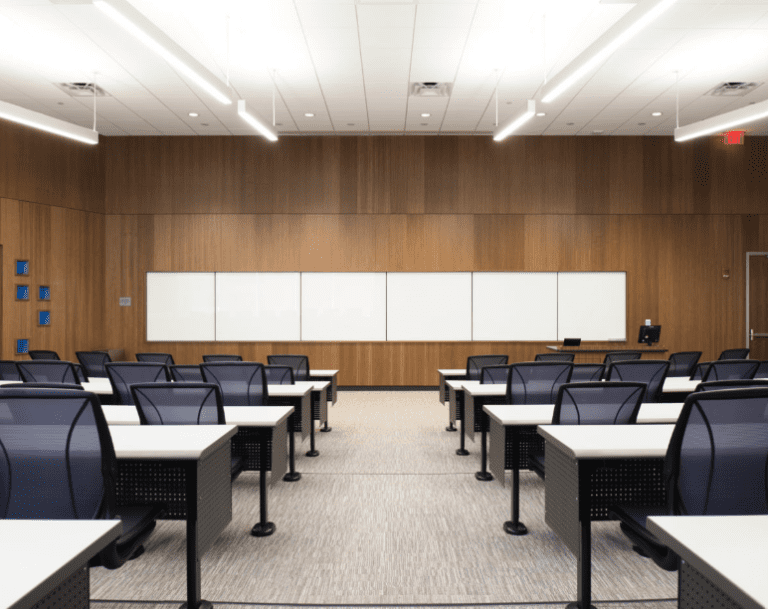
Educational facilities like honor colleges have achieved LEED Silver using wood ceiling systems contributing to multiple credits.
LEED-certified buildings command higher asset values and rental premiums. The U.S. Green Building Council’s LEED v5 framework recognizes that material decisions for ceiling systems impact certification pathways. Rulon’s sustainability commitments detail certifications supporting these goals.
Making the Material Decision
Selecting among suspended ceiling systems requires weighing project-specific priorities. No universal “best” material exists. The right choice depends on project-specific priorities and constraints.
Choose Tiles When:
- Budget is paramount and design aspirations are modest
- Frequent ceiling access is anticipated
- Project timeline is compressed
- Acoustic performance matters more than visual distinction
- Replacement of existing tile systems makes standardization sensible
Choose Wood When:
- Design quality significantly affects project success
- Natural materials align with project aesthetics or sustainability goals
- Premium appearance justifies higher initial investment
- Longevity and durability offset first cost concerns
- Warm, non-institutional atmosphere matters
Explore options through Select-N-Ship for faster delivery.
Choose Metal When:
- Durability in challenging environments is critical
- Modern or industrial aesthetics fit the design direction
- Moisture, cleaning, or contamination resistance is required
- Long-term maintenance costs need minimizing
- Contemporary material palette aligns with brand identity
Hybrid Approaches Work When:
- Different spaces have different performance requirements
- Budget concentration on key areas makes sense
- Visual variety benefits the overall design
- Zoning public vs. private spaces suggests different treatments
Specification Recommendations
Request complete system information from manufacturers. Performance data for the visible surface matters less than the complete assembly’s characteristics. Get documentation for acoustics, fire ratings, seismic compliance, and environmental certifications.
Visit completed projects using your candidate systems. Photos don’t convey material presence, lighting interaction, or spatial quality. Seeing systems in context helps evaluate whether specifications translate to successful results. Review Rulon’s project gallery for material examples.
Involve contractors early for installation reality checks. Complex systems might need specialized crews not readily available in your market. Understanding installation challenges prevents surprises after contract award.
The suspended ceiling system you specify will serve the building for decades. Getting it right requires balancing performance requirements, budget realities, and design aspirations. With clear priorities and thorough evaluation, the choice becomes clear.For material guidance, contact Rulon at 904-584-1400.