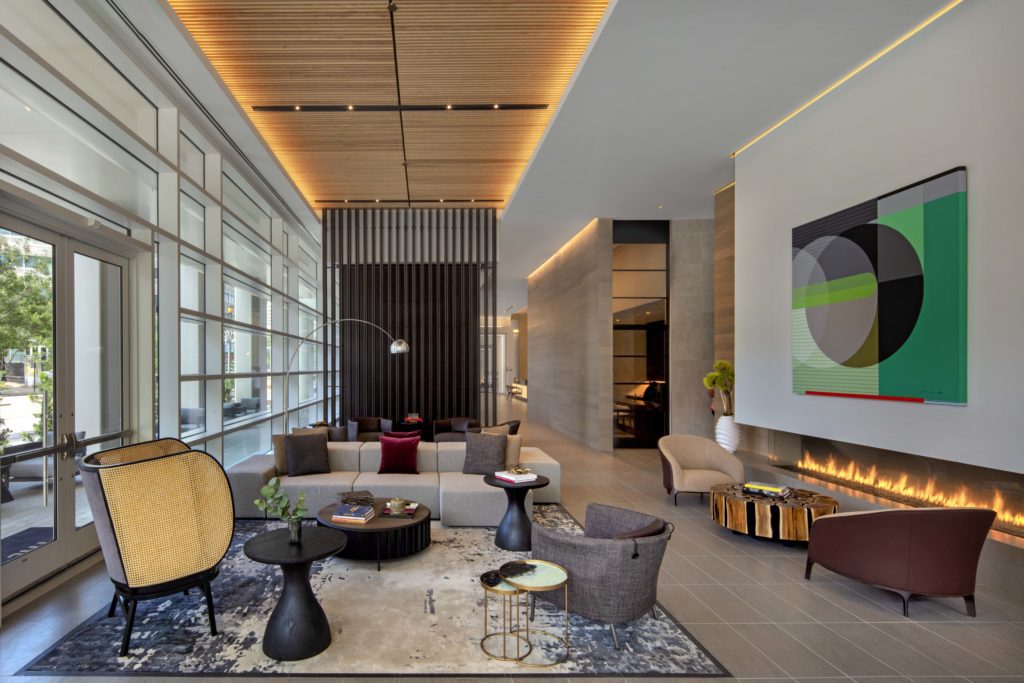
The lobby is not a hallway. It is not a waiting room. It is the first sentence of your building’s story, and guests, clients, and visitors decide how they feel about the entire space within seconds of walking through the door. That means lobby design is not a finishing detail. It is a strategic decision.
Among the most powerful tools an architect or interior designer has in that moment is the ceiling. And increasingly, the most compelling lobbies are looking up to wood.
Why Lobby Design Has Become a Top Priority
The role of the lobby has changed dramatically. According to Hospitality Design’s roundup of 2025 hotel design trends, lobbies are no longer just check-in points. Leading designers describe them as lifestyle hubs where guests eat, work, meet, socialize, and linger. That shift puts enormous pressure on every design decision, including what material is overhead.
In corporate buildings, the lobby makes a brand statement before a single word is exchanged. In hotels, it sets expectations for the entire stay. In cultural institutions and civic spaces, it shapes how the public feels about the organization it has entered. The lobby must simultaneously impress, comfort, and orient, and it must do all of that at a glance.
Wood ceilings rise to that challenge in ways few other materials can.
The Case for Wood in Commercial Lobby Design
Warmth That Reads Instantly
Human beings respond to natural materials intuitively. Where glass and concrete can feel imposing in a large lobby volume, wood introduces warmth, texture, and scale that the eye reads as welcoming. This is not simply an aesthetic preference. It is rooted in biophilic design principles: the idea that people are innately drawn to the patterns and materials of the natural world.
Research on biophilic design in hospitality spaces has shown that connecting guests to natural elements in the lobby and public spaces leads to longer dwell times and a more positive emotional experience. Gensler’s director of hospitality interiors has noted that biophilic design is a cost-effective way to enhance the guest experience, bolster feelings of community, and improve well-being. Wood ceilings are one of the most architecturally integrated ways to deliver that connection.
Scale, Drama, and Visual Direction
A lobby ceiling is rarely a neutral surface. In high-volume commercial spaces, it can span hundreds or even thousands of square feet. The question is not whether to design it, but how intentionally.
Wood ceiling systems give architects the ability to create visual movement and direct attention. Linear planks draw the eye toward a focal point such as a reception desk or entry sequence. Curved or baffle configurations add drama without overwhelming the space. Panel grille systems introduce depth and shadow that flat drywall simply cannot achieve. The result is a lobby design that feels composed rather than accidental.
Soaring ceiling heights are a common challenge in hotel and corporate lobby design. Wood baffles and suspended systems bring the visual plane down to a more human scale without lowering the actual architecture. This is one of the most effective tools for making a grand lobby feel intimate and welcoming rather than cavernous.
Acoustic Performance Where It Matters Most
Lobbies are acoustically demanding environments. Hard floors, glass walls, stone surfaces, and high ceilings all combine to create long reverberation times that fill the space with noise: voices, footsteps, mechanical systems, and ambient sounds layering on top of one another. The result is a space that feels loud and chaotic, regardless of how beautiful the finishes are.
Perforated and grooved wood ceiling panels absorb sound at the frequencies where human speech is most active, dramatically improving clarity and reducing the overall noise floor. Rulon’s hospitality ceiling systems achieve NRC ratings up to 0.90, making them among the most acoustically effective options available while still delivering the warm, architectural presence that lobby design demands. Guests checking in, colleagues catching up, and visitors orienting themselves all benefit from a space where sound is under control.
Lobby Design Ideas by Building Type
Hotel Lobbies
In hotel lobby design, the ceiling is often the signature architectural move. A chevron-patterned wood ceiling draws the eye upward and signals that the brand has invested in every detail of the guest experience. Curved and canopy-style wood systems work beautifully in double-height lobby volumes, softening the scale while creating a sense of arrival. Lighter wood tones paired with integrated lighting convey openness and welcome; darker finishes in intimate seating zones create warmth and encourage guests to settle in.
For hotel lobby design, acoustic control is also a guest experience issue. A lobby that is too loud signals poor design and detracts from the first impression, regardless of how beautiful the materials are. Wood ceiling systems that combine architectural beauty with high NRC ratings resolve both challenges in a single specification. Rulon’s in-depth guide on designing hotel lobbies with wood panels covers layout, material pairing, and acoustic considerations worth exploring early in the design process.
Corporate Building Lobbies
In a corporate lobby, the ceiling communicates brand values. A clean linear wood system signals precision and craft. A sculpted or custom-shaped ceiling configuration signals creative ambition. Natural, warm, and sustainably sourced, wood signals environmental responsibility, which matters increasingly to employees, clients, and investors evaluating a company’s character through its physical spaces.
For corporate lobby design, wood also serves a practical purpose. Open atrium lobbies with exposed concrete or glass can become echo chambers that make conversation difficult and create a stressful first impression for visitors. Acoustic wood ceiling panels resolve this without sacrificing the high-design aesthetic that corporate architecture demands.
Cultural, Civic, and Mixed-Use Lobbies
Museums, performing arts centers, universities, and mixed-use developments all share a lobby design challenge: the space must serve a wide range of people with different needs and expectations, often at the same time. Wood ceilings offer the design flexibility to create a space that feels appropriately formal without being cold, and architecturally significant without being inaccessible.
In these settings, custom profiles, species selection, and finish options allow the ceiling to carry a narrative, connecting the space to its region, its mission, or its history in a way that synthetic materials simply cannot replicate.
What to Consider When Specifying Wood for Lobby Ceilings
Ceiling height and volume. The configuration of the wood system should respond to the height and volume of the lobby. Very tall spaces often benefit from baffles or suspended panel systems that create visual layers. Lower ceilings may call for a continuous linear or flat panel system that adds warmth without reducing the sense of openness.
Lighting integration. Wood ceiling systems can be designed to accommodate integrated linear lighting, downlights, and indirect wash lighting. The interplay between light and wood grain is one of the most effective tools in lobby design, creating depth, shadow, and warmth that shift throughout the day.
Fire rating requirements. Class A fire ratings are typically required in commercial lobby and assembly occupancies. Modern wood ceiling systems, including all systems manufactured by Rulon International, are designed to meet Class A requirements through fire-retardant treatments applied during manufacturing, without compromising the appearance of the finished product.
Species and finish selection. Light species such as maple create brightness and a contemporary feel. Richer species such as white oak or cherry introduce warmth and gravitas. The stain and finish applied to the wood affect both the visual tone and the long-term durability of the installation in a high-traffic environment.
Acoustic targets. Not all wood ceiling products perform equally on acoustics. Perforated panels and grooved systems with appropriate acoustic backing achieve meaningful NRC ratings. For lobby design, targeting an NRC of 0.70 or higher is a reasonable benchmark for controlling reverberation in large, hard-surface spaces.
Making the Case to Clients and Stakeholders
One of the most common conversations in lobby design is the comparison between a custom wood ceiling and a more standard ceiling system. The argument for wood is not simply aesthetic. It is strategic.
According to Hospitality Design’s analysis of what defined hospitality design in 2025, the most successful spaces of the year were not the loudest or the most theatrical. They were the ones who understood how people want to feel when they arrive, prioritizing emotional resonance, comfort, and longevity over spectacle. Wood ceilings deliver exactly that: a first impression that is immediate and emotional, and a material that continues to perform aesthetically and acoustically for decades.
For hotel owners, that translates to guest satisfaction scores and return visits. For corporate clients, it translates to brand perception and talent attraction. For developers, it translates to the kind of differentiation that commands premium rents and drives occupancy.
Start Your Lobby Design Conversation
A wood ceiling in a lobby is not a surface treatment. It is an architectural decision with long-term implications for how every person who enters the building feels about the space. Getting the specification right from the beginning requires thinking through aesthetics, acoustics, lighting, fire performance, and constructability together.
If you are working on a lobby design project and want to explore how a custom wood ceiling system could elevate the space, explore Rulon’s hospitality ceiling solutions or browse the project gallery for inspiration from completed installations. The team at Rulon works directly with architects, designers, and specifiers to develop systems that meet the design intent and the project’s technical requirements, from the first sketch through installation.
The ceiling is the first thing people feel, even when they are not looking at it. Make it count.