Two forces are converging in commercial architecture. The first is a growing demand for interiors that engage human senses, supporting wellness and reducing the stress of sterile environments. The second is the need for construction methods that deliver faster, reduce waste, and maintain consistent quality. When these demands intersect, wood ceiling and wall systems emerge as a natural solution.
For architects and designers pursuingsustainable design interior strategies, understanding why these trends matter now shapes how projects are specified, delivered, and experienced. This is not about choosing between aesthetics and efficiency. It is about recognizing that the best interiors accomplish both.
Two Forces Reshaping Commercial Interiors
The built environment is under new scrutiny. Research consistently demonstrates that interiors influence cognitive performance, emotional regulation, and physical health. TheWELL Building Standard formalizes these insights, evaluating buildings across ten concepts, including Sound, Materials, and Mind. Designers who once treated sensory comfort as secondary now find clients requiring it.
At the same time, construction schedules tighten. Labor shortages, material volatility, and compressed timelines push project teams toward prefabrication and modular methods. The prefabricated modular wall systems market is projected to grow at approximately 7% annually through 2033, driven by demand across the commercial, healthcare, and educational sectors.
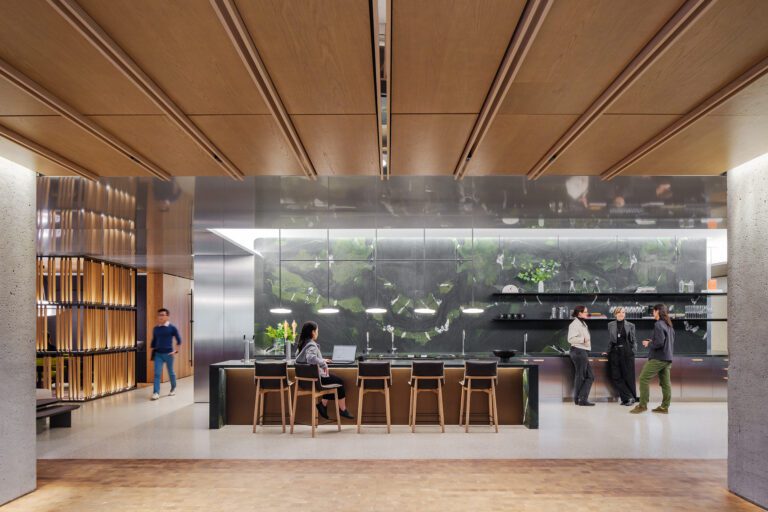
Wood systems occupy a unique position at this intersection. They deliver tactile warmth and acoustic comfort while arriving as factory-finished, installation-ready assemblies. For sustainable design interior goals, wood provides documented sourcing, low-VOC finishes, and lifecycle transparency that streamline certification.
The Science Behind Sensory Design
Sensory design moves beyond visual aesthetics to engage touch, hearing, and even scent. The WELL Building Standard dedicates its Sound concept to acoustic comfort, recognizing that excessive noise increases stress, lowers productivity, and contributes to health issues, including cardiovascular strain.
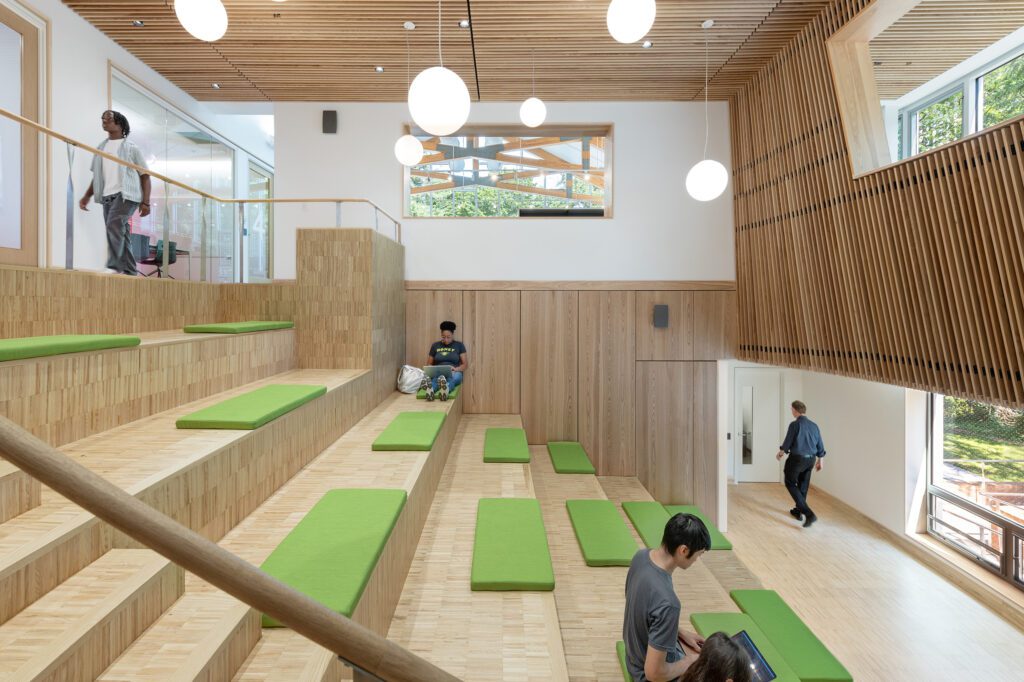
Wood addresses multiple sensory dimensions simultaneously. Its natural grain provides visual variety that reduces fatigue compared to uniform synthetic surfaces. Its tactile warmth invites touch, countering the coldness of glass and metal. When configured as acoustical panels, wood absorbs and diffuses sound, improving speech intelligibility and reducing reverberation.
Research on biophilic design reinforces these benefits. Environments featuring natural materials like wood have been shown to reduce stress and lower heart rates. A Cornell University study found that biophilic elements can decrease drowsiness by 10% and reduce eyestrain and headaches by 84% in office settings. These outcomes directly support wellness certifications and occupant satisfaction.
Aluratone acoustical panels exemplify how wood surfaces integrate acoustic cores while maintaining seamless visual fields. With grooved or perforated faces covering sound-absorbing material, these panels achieve NRC ratings around 0.75 while delivering the organic warmth that synthetic alternatives cannot match.
Why Modular Systems Deliver More Than Speed
Prefabrication offers obvious schedule benefits, but its advantages extend further. Factory-controlled manufacturing ensures dimensional precision, consistent finishes, and quality that field assembly struggles to replicate. Panels arrive with reveals aligned, surfaces protected, and hardware pre-installed.
Material efficiency improves as well. Cutting in controlled environments generates less waste than on-site fabrication. Offcuts can be recycled or repurposed rather than discarded in construction debris. For sustainable design interior strategies, this reduced waste supports environmental goals and simplifies documentation.
Schedule compression remains significant. Modular wood construction can reduce project duration by 30% to 50% compared to site-built methods. Panels manufactured while foundation and site work proceed can be installed as soon as the structure is ready, eliminating sequential delays.
Adaptability matters for lifecycle performance. Modular systems designed for disassembly allow future renovations without demolition. Individual panels can be removed for maintenance, replacement, or access to building systems, extending the useful life of the installation.
Wood Systems That Address Both Demands
Rulon International offers multiple systems engineered for efficient installation without compromising sensory impact.
InTEGrilles feature tegular edges that fit standard 15/16-inch suspended grid systems, allowing drop-in installation in new construction or retrofit applications. These modular panels cover large ceiling areas quickly while delivering the linear rhythm of wood slats.
Linear Panelized systems arrive as pre-assembled modules with multiple attachment methods. Manageable panel sizes simplify handling and ensure easy plenum access for maintenance, all while creating continuous wood surfaces that soften commercial interiors.
For projects with accelerated timelines, theSelect N’ Ship program provides wood ceiling and wall systems in as little as 3-4 weeks after approvals, compared to the standard 8-10 week lead time. This quick-ship option includes Linear, Linear Panelized, Panel Grille, and Endure™ systems across multiple finish options.
TheW Hotel Nashville demonstrates how fully fabricated modular systems simplify complex designs. Early coordination with Rulon transformed a challenging herringbone layout into fully-assembled chevron modules supplied in A/B pairs, drastically reducing in-field labor without sacrificing visual impact. What could have required extensive field fabrication became a streamlined installation.
Children’s Healthcare of Atlanta shows how curved and flat veneer panels create sensory-rich healing environments. The calming lobby features Curvalon panels that transition from wall to ceiling, echoing the tree canopies surrounding the campus and supporting biophilic design goals. For projects requiring similarly expressive curved forms in civic or cultural spaces, curved wood veneer paneling offers additional guidance.
Hawkeye Community College’s Grundy Hall renovation incorporated approximately 1,400 square feet of wood-veneered Flat Panels arranged in a hexagonal pattern inspired by natural forms. The installation connected multiple levels through a feature wall that reinforced wellness goals while creating a distinctive learning environment.
Certification and Documentation Support
Sustainable design interior decisions require verification. Rulon products are manufactured to meetLEED v4 requirements, withFSC-certified wood available for Materials credits. Chain-of-custody documentation confirms that wood originates from sustainably managed forests.
Indoor air quality certifications matter for WELL compliance. Rulon panels achieve Indoor Advantage Gold certification, verifying low chemical emissions that support healthy indoor environments. No-added-formaldehyde cores and low-VOC finishes further contribute to Material Health credits.
Health Product Declarations (HPDs) provide ingredient transparency that certification reviewers require. Combined with Environmental Product Declarations (EPDs) for lifecycle assessment, these documents simplify the compliance process for design teams pursuing multiple certifications.
Forcomprehensive technical guidance on architectural wood panels, including detailed acoustic performance data and fire rating information, additional resources are available.
FAQ
How does sensory design improve commercial building performance?
Sensory design addresses multiple dimensions of occupant experience, including visual comfort, acoustic quality, and tactile richness. Research demonstrates that interiors featuring natural materials reduce stress, improve concentration, and support cognitive performance. For commercial buildings, these outcomes translate to higher tenant satisfaction, reduced absenteeism, and improved productivity. The WELL Building Standard codifies these principles, making sensory design a measurable performance factor.
What makes modular wood ceiling systems more sustainable than traditional construction?
Modular wood systems reduce waste through factory-controlled cutting and material optimization. They minimize on-site construction debris, lower transportation emissions through efficient packaging, and extend building lifecycle through designs that allow component replacement rather than full demolition. FSC-certified sourcing, low-VOC finishes, and documented supply chains further support environmental goals while simplifying certification documentation.
Can wood panels support WELL certification requirements?
Yes. Wood panels contribute to multiple WELL concepts. Acoustic panels address Sound requirements by reducing reverberation and improving speech intelligibility. Low-VOC finishes and no-added-formaldehyde cores support Materials requirements for healthy indoor air. Natural wood surfaces align with Mind concept provisions for biophilic elements and connection to nature, supporting occupant mental health.
How do prefabricated wood systems reduce project timelines?
Prefabricated panels are manufactured while site preparation and foundation work proceed, eliminating sequential delays. Factory finishing means panels arrive ready for installation without on-site sanding, staining, or sealing. Modular formats simplify handling and reduce labor hours. Programs like Select N’ Ship deliver systems in 3-4 weeks, after approvals, when standard timelines cannot accommodate project schedules.
What documentation does Rulon provide for sustainable design interior certification?
Rulon provides FSC chain-of-custody documentation for certified wood products, Health Product Declarations (HPDs) for material ingredient transparency, Indoor Advantage Gold certification for air quality verification, and specifications confirming LEED v4 and WELL compliance. This documentation supports design teams pursuing green building certifications without requiring additional research or verification.
Sensory Demand And Modular Efficiency
The convergence of sensory demand and modular efficiency is not temporary. As wellness standards mature and construction pressures intensify, materials that address both will define successful projects. Explore theproject gallery for inspiration, orcontact the Rulon team to discuss how wood systems can support your sustainable design interior goals.